Yesterday I attended the annual UCS (University Campus Suffolk) Learning and Teaching conference. It was a day packed with presentations looking at open, distant and e-learning, as well as investigating how technology in both the lecture theatre and online can enhance learning.

Keynote speakers, Dr Andrew Middleton and Professor Stephen Gomez discussed student engagement and learning landscapes. Gomez interestingly pointed out that perceptions of what constituted a lecture when he first came to education hadn’t changed since the 14th century, whereby a didactic method of imparting knowledge from one source, the lecturer, to a passive audience, the students, was still being used today. He related this to the differences in business or health care in the 14th century to current day practice, stating that as academics we were either incredibly lucky to hit upon the ‘correct’ methodology back then, or we needed to rethink these old ideologies.

Throughout the rest of the day, I heard speakers discuss the benefits of online handbooks and  teaching resources; using technologies for adaptive release of tests to students (whereby a learner can not progress to the next stage of a test until they’ve completed that section correctly); the advantages of verbal feedback being supplied as audio files; and the idea of releasing feedback and grades separately to encourage reflection and help students see feedback as supportive rather than linking it to what they may see as negative grades.

In the afternoon Professor David Gill gave a presentation on how Web 2.0 technologies had become leading tools in linking students, academic research and the press, with how the Looting Matters blog, which reports on archaeological research and stolen antiquaries, had become a ‘go to’ website for Reuters when reporting on such issues. As a counterpoint to some of the other presentations during the proceedings, Dr Fidel Meraz and Dr Mike Doherty, lecturers from the UCS Interior Architecture and Design course, discussed the importance of not relying on the fetishisation of technology when working with students who have to have an experiential perspective on the human and social aspects of navigating space and designing for interaction in a physical environment.

The day was extremely stimulating. The pedagogical rationale surrounding different frameworks of teaching, and how the  methodology behind decisions of delivery using technology has provided much food for thought in considering my own teaching. In particular, Professor Gomez demonstrated an online resource for tagging imagery which could be very useful in critiques about student work, or when teaching the history of design.

However, throughout the day there were many questions I felt weren’t being discussed. These include:
—data protection of staff recording things on personal devices
—staff using personal devices they’ve paid for in order to meet expectations of contemporary education
—health and safety issues around RSI
—the possible disenfranchising of students who can’t afford up to date technology
—the possible disenfranchising of students and staff who live in areas of web poverty
—workload management and work/life balance issues in an ‘always connected’ culture

The focus of all the presenters tended to be on pedagogy without any discussion about any wider ethical implications. For example, data protection was only raised once in one Q&A session, and social justice was only briefly discussed at the end of the day in the plenary session when a student raised the issue for the panel to discuss. For me, for such ethical considerations in open, distance and e-learning have to be explored alongside all other discussions about the positive benefits of championing existing and emerging technologies in higher education. Drs Meraz and Doherty have a point in using the term the ‘fetishisation of technology’ and I worry we are rushing into a future where by all manner of problems will rear their heads down the line for both students and lectures if due consideration of such issues isn’t embedded into current dialogue.

These comments are not meant to be critical of any discussions that took place, or to be seen with any luddite connotations, because I embrace new technology in both my personal life and professional practice, and can truly see the potential advantages to both learners and teachers that emerged from the majority of presentations I witnessed. But they are meant as a word of caution on not divorcing the social and political implications of championing technology in any such discussions, and the belief that, as educationists, it is our duty to always be considering our practice holistically.
I love the idea of the Art Everywhere project. For the uninitiated, Art Everywhere proposes to fill billboards across the UK with prints of famous art. I like the concept of this because:

Firstly, while not a new idea, it is getting art out of galleries and onto the streets, making it more accessable. *

Secondly, it is democratic, (to a degree). The public can vote on what they want to see displayed on billboards across the nation. * *

Thirdly, it is putting billboards out of commission to advertisers for a period of time—the ultimate culture jam, you could argue. * * *

For more details about the project, head on over to the Art Everywhere website and donate £3 to help make this happen:  arteverywhere.org.uk


* It could be argued that the concept behind this has been borrowed from a recent campaign The Partners did for The National Gallery

* * I would like to know more about the long listing process, and how the decisions were made about what the public can vote on. For example, I was very disappointed to find no Gilbert & George on the list, but then maybe there is already enough shit and piss on our high streets!

* * * When there was an advert ban in São Paulo in 2007 it created an interesting visual and commercial void in the city scape with billboards stripped of their posters—but I always thought that was a waste of space, however intriguing it looked.

Contractual Freedom is a short film I made seven years ago about the then obsession with ID Cards and surveillance that Tony Blair’s governement had at the time.

While not directly relevant to the current internet spy scandle, there are enough cross overs to feel it is worth posting this old film again in 2013.

Contractual Freedom

Contractual Freedom was short listed for the Big Issue Film Festival in 2007.

Screen Shot 2013-06-18 at 07.59.00

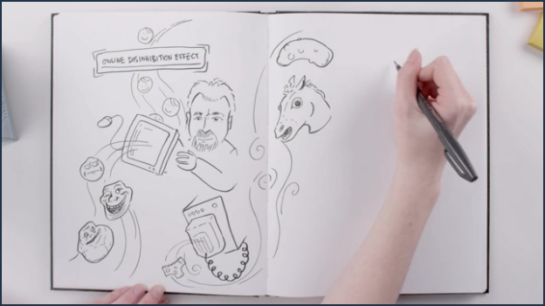
Still from Academic Earth video, The Psychology of the Internet Troll

Ever wondered what the psychology of a troll is, you know, those annoying people who are deliberately out to promote arguments and upset others on the internet? Well, according to the video The Psychology of the Internet Troll, hosted over on Academic Earth, it is all linked to being alone. “We all behave differently when alone. Anonymity frees us from a perceived obligation to act in accordance with certain social norms,” they state, going on to say that, “while most of our anonymous behavior is relatively benign, what happens when it isn’t?…We’re 20 years into the experiment of the World Wide Web, and we can clearly see how Internet anonymity plays out across social media, chat rooms, and comment sections. Usually just a nuisance, anonymous troublemakers, known as trolls, can be dangerous when they go after the vulnerable. In an effort to better understand what makes them tick, psychologists are starting to take a closer look at the psychology of the Internet troll.”

My own experience with trolls has thankfully been limited to befriending someone on Facebook who I hadn’t seen for over 15 years. They then preceded to comment, uninvited, on conversations I was having with others online, and stating to get argumentative with people they didn’t know. They also started to negatively comment on anything I posted. I didn’t think of this activity as trolling at first, until a friend posted a comment after a protracted argument with said protagonist that they had forgotten the adage “do not feed the troll”, and signed off from the conversation. This realisation that my old acquaintance’s behaviour was deliberately vindictive, which I had only previously thought of as annoying, opened my eyes to his divisive actions and I unfriended him straight away.

The video is well worth a watch, and uses animation to break down some complex psychological research that explains the behaviour and mentality behind trolling. And if there is any one thing you have to keep reminding yourself when online or using any form of social media, it is: DO NOT FEED THE TROLL.

Watch the Psychology of the Internet Troll here.

Below is a comment I made on the Creative Review blog in response to a post about commercial enterprise initiatives on higher education graphic design courses. For the full context, please read the original post on Creative Review first:
NUA students design beer brand identity

—————————————————————————————————————————————

I am inundated with requests every year from people wanting students to get involved in a live project, stating they think it will be good for their folio. Many are just after a free piece of design, and when I point out the ethics of this in my (now) stock email reply, I rarely hear from them again. If we can run something through a module, so it counts towards the students’ degree, or if the company is prepared to offer up a competition brief, then we will look at what we can do to run such requests while ensuring that students are not being exploited.

But as agendas in HE change, and there is a pressure for institutions to become ‘income generators’ as application figures plummet, then I can see the rationale for what NUA have done here. But I’m still left with an uncomfortable feeling with such arrangements especially with increased fees situation. Questions arise such as how you give a similar level of experience to ALL students so that there is parity of opportunity in an increasingly commodified education system? It would also be interesting to know the level of tutor involvement in the NUA project, and how much of the success of the project, in design terms, was down to their expert consultancy? Was this overview an incentive for commercial companies to get involved in education in this way, and how do local design firms in Norwich feel about this loss of potential revenue? However, experience is experience, and is often a prerequisite for any graduate to get a job these days so it could be argued that the industry has created a rod for its own back should any design firm have a problem with this.

I recently ran a project with second year graphic design students to design a healthy eating guide for people who are in the unfortunate position of having to rely on food aid/food banks. Suffolk County Council got involved, and students had to pitch their ideas to them, liaise directly with the client, organise meetings and buy all the print themselves, (with SCC paying all production costs). The students ran this from start to finish and the learning experience was invaluable to them, as was the underpinning social/community aspect of the project. I deliberately kept a hands off approach to the design side of things, as this was for the students and the client to discuss, and all I did was over see the process to ensure students weren’t coming unstuck or were not at anytime out of their depth in what was an ambitious brief. At no stage in the project did I feel I was compromising the students in their development as professionals, and the transferable skills they learnt along the way advanced them in leaps and bounds. It will be interesting to see how this feeds into their final year of study and their future professional careers. Project details can be found here for anyone interested: http://tinyurl.com/kgtj5rc

This is a vital debate for both design education and the design industry to be having. I look forward to reading future reports along these lines in Creative Review.
Nigel Ball
2013-06-07 12:39:17

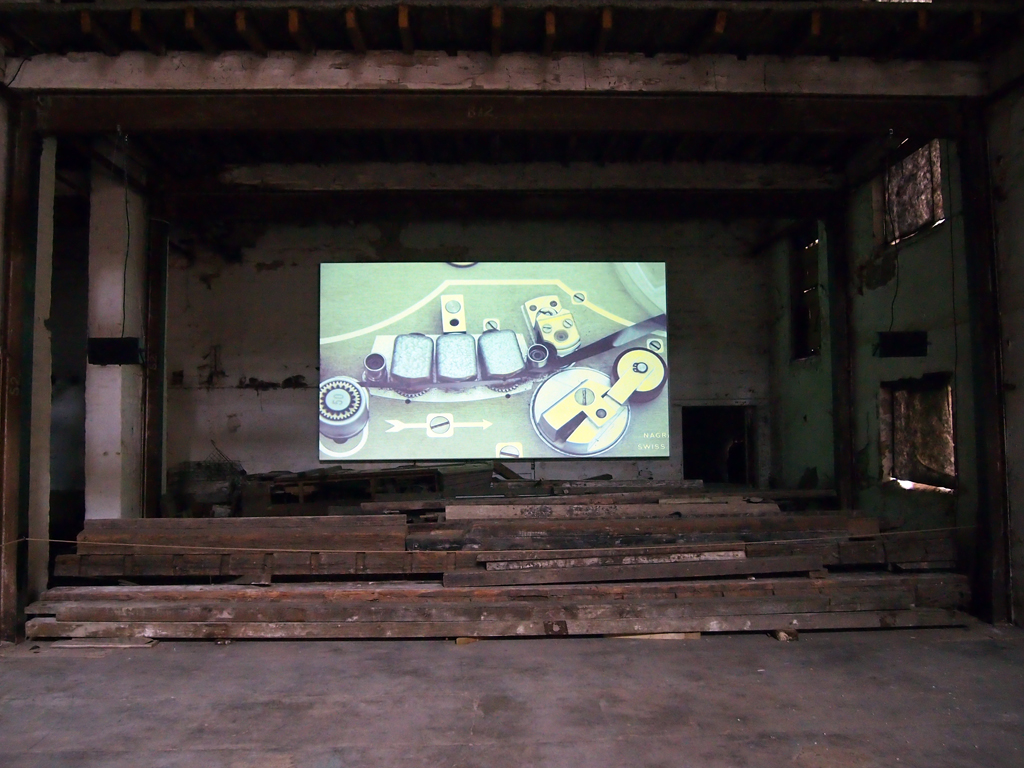
The third annual SNAP: Art at the Aldeburgh Festival, is currently on at Snape MaltingsSuffolk, with, as usual, some interesting work amongst the marshlands, dilapidated buildings and tourist tat shops. Worth a visit if you are in the area.

This year, SNAP has a fringe event called SNIP, in a barn a few yards down the road from Snape Maltings, which is worth a look as well. UCS staff and student work is on display.

Bennedict Drew’s projection: Matériel at SNAP

SNAP runs until 30 June

SNIP runs until 23 June

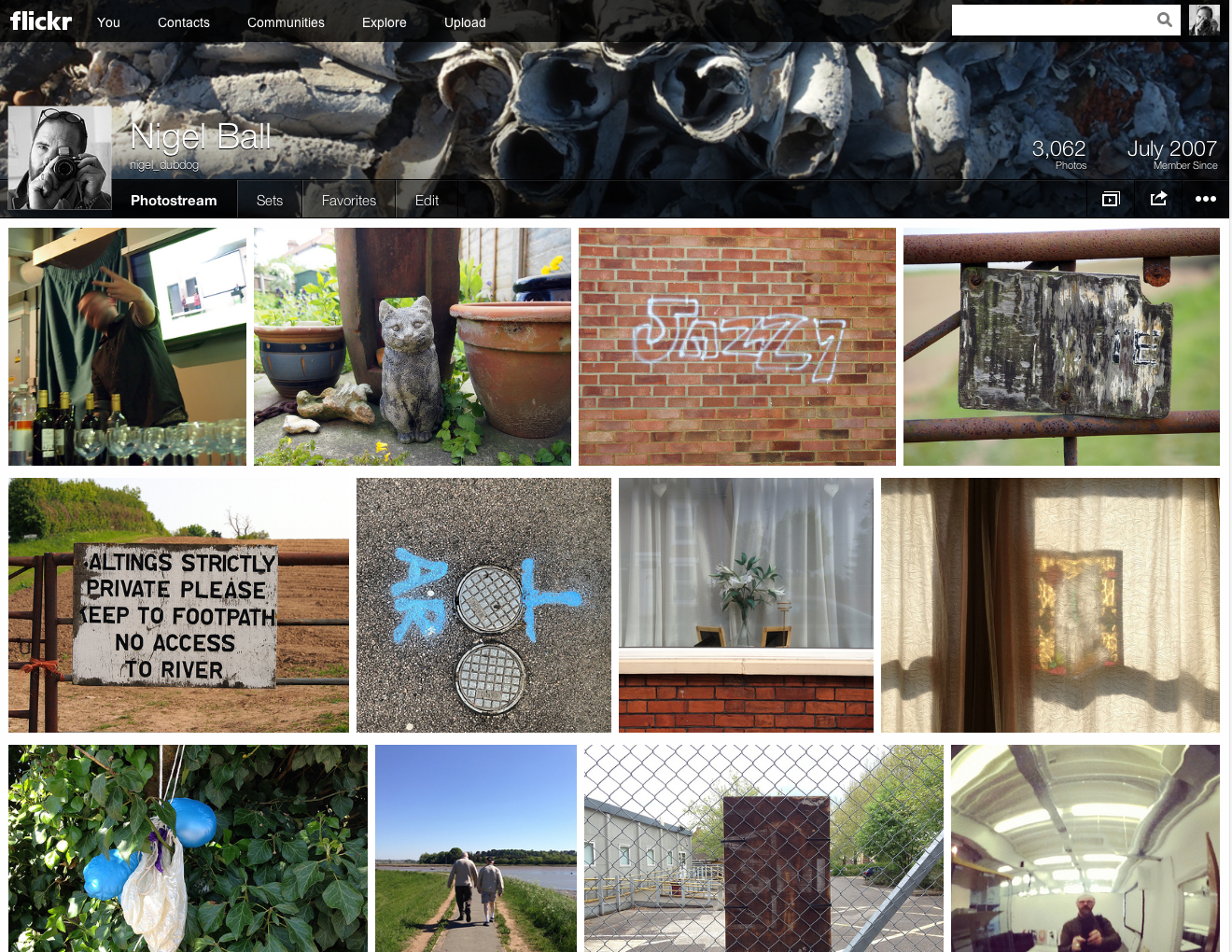
Screen Shot 2013-06-09 at 10.50.44It seems that some people are still getting their knickers in a twist about Yahoo’s relaunch of their photo sharing site Flickr. Lots of people were complaining about it before the relaunch, and lots are complaining about it afterwards.

For the record, I (mostly) like it. I thought it had started to look dated, and when the iPhone app was redesigned in December 2012, my immediate response was that I hoped there would be a redesign of the main website along similar lines. And my wish came true.

Sure, the constant scrolling is playing havoc with my first generation iPad, crashing Safari as it does. But then so does Facebook and iTunes, as websites become so content laden that older processors can’t cope. But this is the way the web is going, and there is nothing I can do about it.

Visually, the new Flickr gives me a better view of all of my photos without having to enlarge them—previously the ‘large’ view was restricted to 5 images on my home page, which then switched to thumbnails for all subsequent pages. This always annoyed me. But now it gives an over view of someone’s visual interests from the outset. The photograph sizes are just enough to see what I want from the images I only want to ponder momentarily, and I can enlarge those that grab my attention and interest. Previously, past the first page, I had to enlarge pretty much every image to decide if I wanted to investigate them or not. This has got to be an improvement.

I accept that it may not suit the ‘professional’ photographer as well as it once did, but there are alternatives they can use. And they tend to have quite an elitist view about photography anyway and sneer at anything that has a mass appeal—you’ve only got to look at the bitching online about Instagram to see this, (which I’ve discussed previously on here).

So, well done Yahoo. When my Pro account becomes null and void and I have to pay for no adverts, I will do. You are a commercial enterprise offering a service after all—I want to use that service and I don’t want adverts—no complaint there from me.

To view my Flickr pages, go here.

sound-system-the-clash

In my teens and early twenties I was a big Clash fan. Then as my music tastes matured, and I started to tire of rock music’s clichés, I started to fall out of love with the band’s early work, which traded so heavily on rock clichés. Half of Black Market Clash, and all of Sandinista and Combat Rock are all I can really listen to by them now. It is almost as if I have divided them into two different bands. The diversity of their later work, post-London Calling, which experimented with different styles and genres of music, bought a breadth to the band that wasn’t previously there. This period of material outshines anything that went before it for its sheer inquisitiveness. Their artistry flourished as their music became conceptually linked to lyrical content and they matured as they became more and more interested in emerging popular cultures from around the globe.

Outside of their music, another appeal of The Clash to my young eyes was their over-all aesthetic. Encouraged in their early days by manager Bernie Rhodes, the army surplus and leather jacket stylings gave a rebel stance that became emblematic, and spawned many a teenage lookalike. This defined punk fashion in many immotators eyes, not least myself in my late teenage years. In their graphics, their evolving visual language of distressed or stencil typography, saturated revolutionary reds and military greens, heavily posed photographs, and knowing reggae and hip-hop reference points, formed an aggressive identity that flirted with insurrectionary fervour. The influence of this has been utilised by many a marketeer in the last 20 years, and you see their graphic stylings on anything nowadays that is trying to look slightly edgy, urban and rebellious, from skateboard magazines to energy drinks. Mainstream ‘alternative’ would be an apt description and the ‘making money out of rebellion’ Strummer quote rather obviously comes back to haunt his memory.

When I heard about the proposed release of Sound System, a box set of Clash material due to hit the shops this September, nostalgia got the better of me and I searched it out online. I was expecting to be disappointed, a feeling that nostalgia often promotes—stripped of any contemporary relevance and promoting a sense of longing for something that can never be again. However, disappointing is too weak a word for what I found; as I looked at the pre-release marketing shots and promo videos I was gob-smacked by how truly awful this looked. The ‘boom’ box container is the first thing that grates. I can’t even think where I would keep this in my house if I owned one, I certainly wouldn’t want it on show. Ugly and cheap are words I try to avoid when discussing design, but I’m afraid I can find no better ones to articulate here. Then there are the contents—stickers, dog tags, a poster presented in a giant cigarette tube, badges, more stickers—gimmick after gimmick thrown together on a whim with little thought to consistency or sophistication. Childish, naive, and verging on being patronising, it is if Sound System is aimed at the average 14 year-old punk new-bee rather than ageing Clash fans with the disposable £111 to spend on it.

If this project was just down to record company excesses trying to make a quick buck in a dying industry, then I could almost excuse it, distancing as it would the product from the band. But to know that Mick Jones and Paul Simonon have been involved in designing this is disheartening, as it does a real disservice to The Clash’s legacy. I can’t believe that Joe Strummer isn’t turning in his grave.

ThePartners

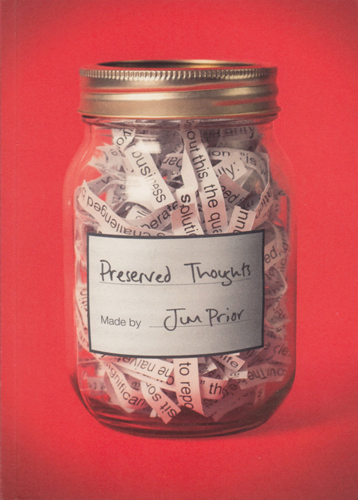
I’ve just finished reading Preserved Thoughts by The Partners’ Jim Prior. It is a neat little A5 (ish) book and download of essays, blog posts and talks he has written and delivered over the course of the last three years. It deals with many different aspects of branding, touching on topics as diverse as morality, creativity in big business, social purpose and human aspiration. Thought provoking and intelligent, it is highly recommended for anyone interested in branding.

Get the book here, or the download here.