Sliderinvite

It’s that time of year again when Graphic Design and Graphic Illustration students at UCS start preparing for their End of Year Show. This year’s cohort have titled their show Blink, and are showcasing their work and advertising the show with the launch of a website and Twitter feed.

The UCS Arts and Humanities End of Year Show also features work from Photography, Film, Fine Art, Interior Architecture and Design, Computer Games Design, Dance, History and English degree courses, as well as some collaborative work between second year Graphic Design and English students. The Private View is on 4 June, 18:00–21:00, with the Graphic Design course taking pride of place for the first time in the Waterfront Gallery alongside Photography in the Waterfront Building lobby. The rest of the course shows are housed in the Arts Building. The public view runs from 5–14 June, including weekends.

Below is a piece I wrote for the UCS website:
The Graphic Design show at UCS has developed a reputation for showcasing exciting and professionally realised work, demonstrating students’ ability to progress into employment straight from their degree. This year will be no different and students are proud to be displaying their work in the Waterfront Gallery for the first time.

Exhibited work will include final projects alongside their professional portfolios which demonstrate the skills and creativity students have been honing over the duration of their course. As well as this, there will be a showcase of work created for placement projects with BBC Worldwide and Turner Classic Movies (TCM). Creative Directors from both organisations will be visiting UCS on the day of the Private View to look through the work and interview students before awarding placements. 

Course Leader Nigel Ball says: “On behalf of the course team, I can honestly say it has been a pleasure to work with this group of students over their time on the course. Every year it is highly rewarding to reflect on the individual and collective journeys of our students who are about to go out into the world and become the next wave of designers and illustrators shaping our visual environment. Year on year we see more of our graduates gaining employment within a very short period of time after finishing their degrees—the professionalism and creativity this year group have displayed throughout their time at UCS leads us to believe they will be no different. It was only 2 years ago as first year students that they designed the graphics for the End Of Year Show 2013, a very public arena for first year students to be working in. Now it is time for them to shine in their own exhibition. We wish them the greatest success for their futures.”

As opposed to:

Top: Understanding a Photograph. John Berger. 1968
Bottom: Premier Inn wisdom. 2015

P4241186

A large corner of my loft is stacked with vinyl records, mostly 12″ LPs, but there is a smaller pile of 7″ singles. They are going to stay there, save for the odd time I want to change the artwork in my three album-art frames that deck our landing. It is fair to say I haven’t jumped on the supposed vinyl revival—there’s already enough nostalgia in the world, I don’t need any more.

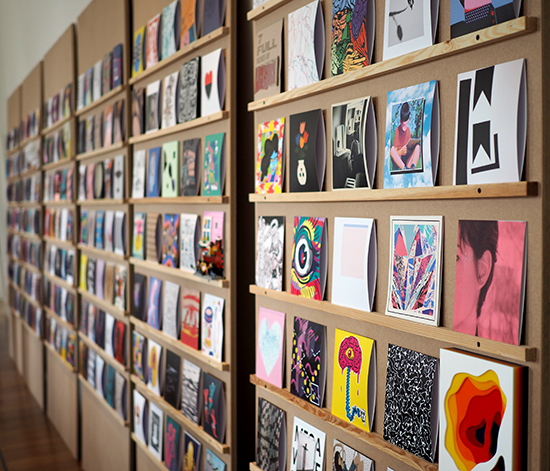
What I do miss about vinyl is the sleeves, hence my love of my album-art frames. Unfortunately 7″ single sleeves were never quite as explorative and there are few I can recall that deserve being displayed; a couple by The Clash, Sex Pistols or The Smiths maybe, but generally the design of 7″ single sleeves wasn’t anywhere as near as engaging as their LP counterparts, being more of a disposable commodity. But that’s certainly not the case with the recent Secret 7″ exhibition at Somerset House that I accidentally stumbled on last week when visiting Pick Me Up 2015. Secret 7″ is a project in its third year that chooses 7 tracks and presses each to 7″ vinyl. The organisers then invite designers and artists to interpret the tracks as they see fit and submit a cover, displayed anonymously, which the public can then buy for £50 apiece. All money goes to charity, and this year the chosen beneficiary is Nordoff Robbins, who are dedicated to transforming lives of vulnerable children and adults through music therapy. Like similar secret postcard projects, you don’t know whether you are buying a future collectors’ piece by a famous creative, or something whipped up by someone’s 5 year old daughter, (which could equally be a future collectors’ piece, of course).

P4241182

It is interesting to browse the racks not knowing who produced what and trying to guess the track. Many are clearly ‘just’ artworks that make no attempt to represent or link to their musical content. The fact that no title or band name is displayed obviously separates these sleeves from a standard 7″ sleeve—while some designers of commercial records have previously and deliberately not listed a band or track title on a cover, it is still the case that the vast majority of record sleeves do have this information adorning them, as obviously the reason d’être of the 7″ single from a record company’s point of view is to sell as many units as possible. But seeing so many sleeves displayed in one place with no typographic indication of band or title, I felt does reduce this exercise, in some cases, to appealing to an artist’s vanity and results in purely aesthetic outcomes rather than embracing communication—much like Pick Me Up, I felt there was a fair amount of style over substance. Regardless, taking a standard form and asking a plethora of people to work within its confines does lead to some interesting and innovative outcomes.

P4241179

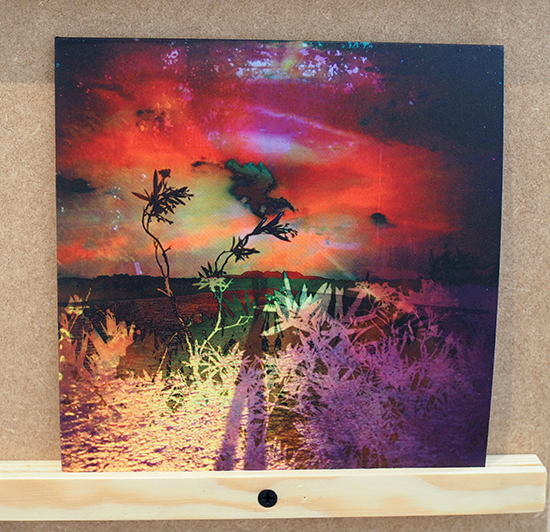
I was personally taken with those creatives that had worked with photography, especially as the vast majority of the sleeves were illustrative. As a result, the photography pieces did tend to jump out to my eyes.

P4241170

P4241173

Alongside the rows and rows of sleeves, seven designers were asked to create a bespoke poster for one of the 7′ tracks chosen. These posters were also available to buy for £50 but limited to a 100 print run and included submissions from Erik Spiekermann, Craig Ward, Spin, The Counter Press, Peter Bankov, Felix Pfäffli and Bread Collective.

P4241172

P4241185

Unfortunately I’m writing this post on the last day the exhibition is open. However, the sale of the sleeves doesn’t start until tomorrow, 4 May 2015, so there’s still a chance to grab a 7″ single sleeve and give money to a good cause. Go to the Secret 7″ website for more details.

Secret 7″ 

The selected tracks for 2015 are:
The Chemical Brothers—Let Forever Be
Diana Ross and the Supremes—Reflections
The Maccabees—Go
Peter Gabriel—Sledgehammer
The Rolling Stones—Dead Flowers
St. Vincent—Digital Witness
Underworld—Born Slippy (Nuxx)

Secret

And while on the subject of singles:

WCountry_Cover

A few years ago I wrote an article for Eye magazine blog after coming across a programme for the 1951 Festival of Britain. At the time I was aware of the existence of a series of small guide-books published to coincide with the festival called About Britain, but it was only recently that I actually came across any.

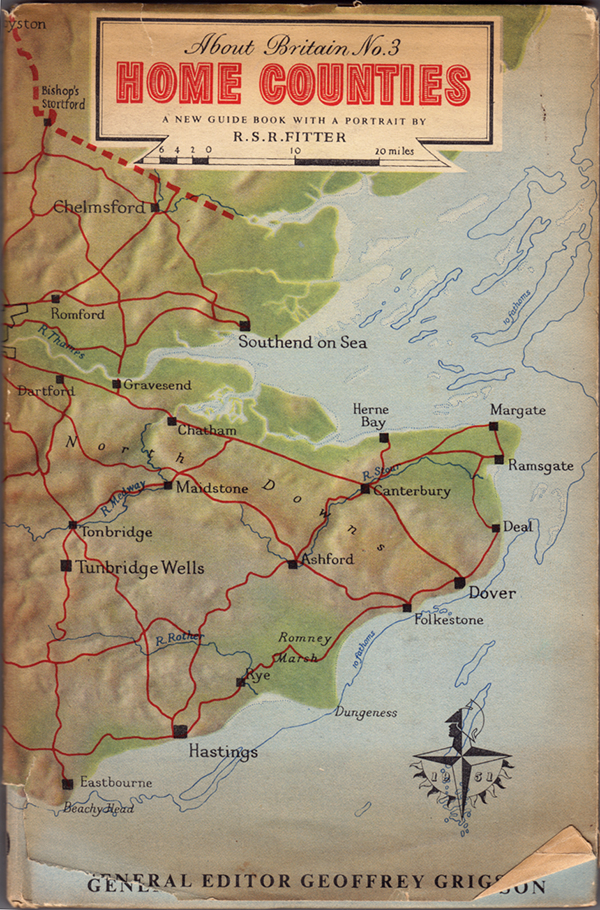
There were 13 of these books published covering different regions of Britain. The two that I’ve been lucky enough to find cover the West Country and Home Counties. The latter is more fascinating to me being more familiar with the areas discussed within. As the inside dust jacket cover states: “These books are guides to the living Britain, covering the whole country, England, Wales, Scotland and Northern Ireland. Each is a guide to a well-defined district, planned to give you the fundamental facts about its scenery, its monuments, its buildings, its natural history, its people and their work and characteristics.”

HCounties_Cover

The covers feature maps of the region, both as a hard-case wrap and as a dust jacket. The fact the map was printed on both case and jacket allowed the owner of the book to remove the jacket and use it for reference while reading, as the inside back cover of the Home Counties edition explains, (below). Whether this was a deliberate design decision or some clever post-rationalisation will never be known, but it is still a great idea.

HCounties_InsideBackCover

Naturally the books at first glance seem somewhat dated. However, there is a real sense of optimism and forward thinking in regard to the contents once you consider the context within which these were published. These are meant to be egalitarian and easily accessible by all to instil a sense of pride in our nation, and encourage the reader of better times to come as the country shook off the last vestiges of the Second World War.

HCounties_Ford

Featured inside are stories of emerging industries, as can be seen in the spread above about Ford. However, I’m not sure how the residents of Canvey Island or Peacehaven would react to where they lived as being described as “unplanned calamities”. Alongside such articles were stories of traditional farming methods, town planning, historical features and natural wonders.

Also published in these guides were tours of local areas with maps you could follow by car, bus or bike, clearly aimed at the working classes taking time out to visit the country and thus encouraging an emerging tourist industry.

HCounties_TheTours

HCounties_Tour

Some aspects are seen as very antiquated, such as the description of Londoners’ characteristics: “his steadiness, humour, independence and attitude to authority…His loyalty to the ruler he approves is unbounded, and he likes to show it on Royal occasions.” Many republicans of today would disagree with such cap doffing, and further dating the writing, you have to remind yourself of the times when noticing the inherent sexism within the text. That, and references to empire aside, there is a refreshing regard to immigration: “London welcomes strangers of all countries and all colours, whether they seek refuge as exiles, come to work or come to play.” UKIP take note, the Britain in the 1950s you would wish us to return to was more forward thinking than you would have us believe.

HCounties_Londoners

HCounties_Welcome

The openness and forward thinking is evident throughout as Britain looked to escape the war years and propel itself into the 1950s. It had a plan to rebuild itself, reject the austerity of rationing and launch into a new era of rebuilding a country that worked for its inhabitants. As the opening chapter states:

“This guide-book is one of a series ‘About Britain,’ so we hope, in a new way…it begins with a portrait of the district—an account of many of the facts about it which are worth knowing…  These guides have been prompted by the Festival of Britain. The Festival shows how the British people, with their energy and natural resources, contribute to civilisation. So the guide-books as well celebrate a European country alert, ready for the future, and strengthened by a tradition which you can see in its remarkable monuments and products of history and even pre-history. If the country includes Birmingham, Glasgow or Belfast, it includes Stonehenge. If it contains Durham Cathedral, it contains coal mines, iron foundries, and the newest factories devising all the goods of a developing civilisation.”

Reading through these guide-books in the last three weeks of a General Election in this country—one that is caged in the terminology of austerity, cuts, Europe and immigration; one that seeks to blame, point fingers, build walls and retract in on itself—I am reminded of the feelings I had when I first read the official Festival of Britain programme that compelled me to write my Eye piece. And that is if politicians in the late 1940s/early 1950s could envisage emerging from such a financial disaster as the Second world War, looking forward and having hope for the future, why can’t they today? For the Festival of Britain organisers, their take on the world wasn’t one of austerity and boarders, blaming those worst off while appeasing financiers; theirs was a vision of everyone working together for the benefit of all. Something I believe that many of our current crop of politicians could do well to learn from.

Quaint maybe, ambitious certainly, but if history teaches us anything, it teaches us that these visionaries achieved their goals; for this is the era that gave us public services such as the NHS and much of the infrastructure that has supported us for the last 63 years. Will the decisions of the next government have such a huge impact on our way of life and our culture? Only negatively I fear.

Screen Shot 2015-04-15 at 11.10.42

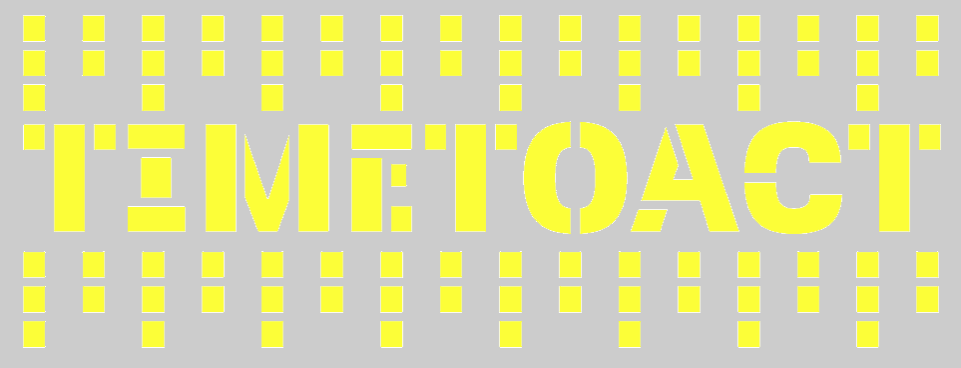
I’m pleased to have had work added to the ‘Agit-Prop Army’ of images on Occupy Design’s Time To Act webpage. Submit your posters and memes for the Climate Movement to help their campaign on the streets of Paris in December and on social media throughout 2015.

As Occupy Design say:

Time is running out. Climate Change is happening and without a serious global plan to replace our profit driven, fossil fuelled economy our very existence as a species is threatened this century.

But the Climate Crisis is not just a threat but an opportunity to chart a different course, one that shifts the Economy away from Capitalism to one that is more just, democratic and resilient that we all can share.

2015 is a crucial year for the climate. In December, governments will come together in Paris at the COP21 UN Climate Summit to strike a new deal for the climate—we must make our voices heard, we know that they will not act unless we make them and we can no longer accept more of the same.

PearShaped

Multicoloured triangles seem to be everywhere at the moment. Some are produced using low poly online generators for backgrounds, (or overlays), others are a little more discerning. But no doubt it is an emerging trend and now that I am aware of them, I can’t stop seeing them everywhere.

And as I spot more, the more I have to add examples of them to this post! Please make it stop!

IMG_0445

Front cover for the UCS Arts and Humanities brochure. Design: Firebrand. In Firebrand’s defence, this was the first occasion I saw these triangles over 9 months ago—you can therefore consider yourselves trendsetters Firebrand.

IMG_0443

Back cover of Bloomsbury catalogue of Fairchild Books art and design imprint. Design: unknown

Screen Shot 2015-03-30 at 14.38.47

BBC election graphics. Design: unknown

Screen Shot 2015-03-30 at 14.33.56

BBC election 2015 logo. Design: unknown

IMG_0448

Van livery seen in Ipswich. Design: unknown

International Innovation online journal. Design: unknown

International Innovation online journal. Design: unknown

Screen Shot 2015-04-09 at 11.04.27

Album sleeve for Jamie XX – In Colour. Design: unknown.

How Design Live Conference 2015. Design: unknown

How Design Live Conference 2015. Design: unknown

How Design Live close-up

How Design Live close-up

aba8a88d-2d01-49b8-85cb-893134732c9e-620x451

The US and UK book jacket designs for Harper Lee’s Go Set A Watchman. Picture: L—HarperCollins / R—William Heinemann. Source: guardian.com

I’ve written here and elsewhere before about how graphic design is overlooked in favour of other arts disciplines, (see the post Shelf / Life and my McJunk essay as two examples). I’ve come to expect this, so when Will Gompertz—the BBC’s Arts Correspondent—recorded a piece for the Six O’Clock News this week about the Design of the Year Awards at The Design Museum, I wasn’t surprised that the graphic design nominations weren’t mentioned at all.

When The Guardian published an article on its website in the same week about the book jackets for the release of Harper Lee’s sequel / prequel to To Kill A Mockingbird, I thought some balance may be restored. In fairness to The Guardian at least the article is about design, and they did invite designer Stuart Bache to critique the covers for an accompanying piece, (which he does excellently). But what really annoyed me was that no designer’s names are mentioned at all in either article. I don’t blame The Guardian for this, as none of the stories I’ve read about these jackets on any other website mentions the designers involved either. This suggests that for some reason the publishing houses aren’t mentioning names, (the book is being released by different publishers in the UK and the US). It maybe standard for in-house designers not to be given publicity—although I’d hope their names will be on the actual release somewhere—but both William Heinemann (UK) and HarperCollins (US) are heavily publicising these design previews to generate free advertising in the press in the run-up to the July publishing date.

I think it is a shame that none of the articles I’ve read in regard to these jackets chooses to question why such anonymity exists when it comes to graphic design, and this in itself maintains the status quo of graphic design not being treated with the same esteem as other arts disciplines. While at least Bache mentions the covers are designed by designers and The Guardian did seek him out as an expert witness, it would be good to read journalists questioning this lack of credit as they surely would do if this was the preview of a tie-in artwork by an actual proper artist.

IMG_0359

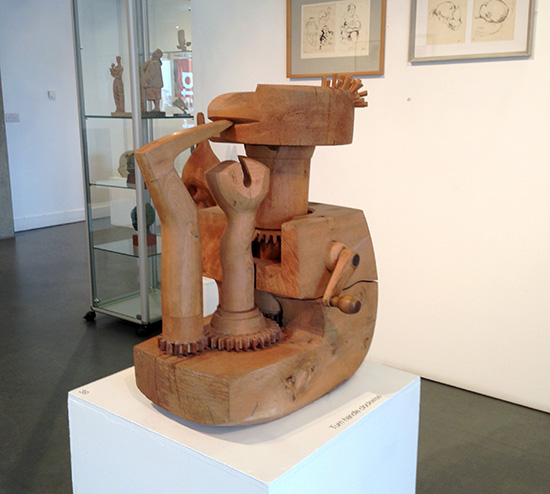
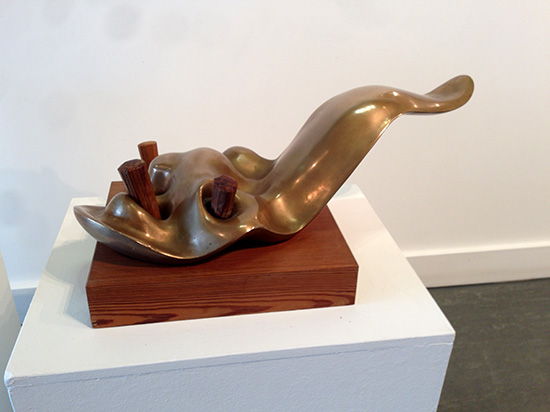
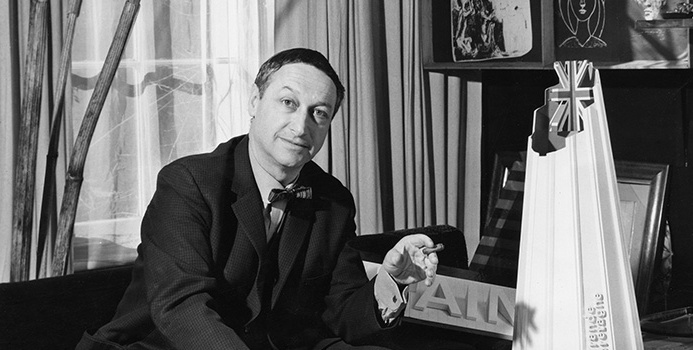
University Campus Suffolk (UCS) Waterfront Gallery is currently hosting a retrospective of Bernard Reynolds, (1915–1997), to celebrate the centenary of his birth. Reynolds was an innovative sculptor and educator from East Anglia whose name is well established in Ipswich. However, wandering through the exhibition the other day I was struck by how much of an important review of his work this is, especially as he was overlooked in favour of many of his contemporaries who went on to be world-renowned. Reynolds’ website states: “…although Bernard is most widely known as a sculptor, he possessed the capacity to be an inspirational teacher as well as an artist, and he fulfilled both of these roles with his own particular kind of integrity. Far from flamboyantly ‘arty’, Bernard’s approach was no less passionate for the application of a quietly rigorous self-imposed discipline to every project he undertook—and his projects were many and varied.”

IMG_0371

Bird sculls feature heavily throughout the show in a variety of different mediums. It is also good to see his preliminary drawings and sketchbook work alongside finished outcomes.

IMG_0390 IMG_0386

I noticed a sense of comic exploration in many of the pieces, alongside a strong mythical presence. I was reminded of headwear I’ve seen adorned by people in photographs or documentaries examining English folk-lore customs—particularly in that of the parrot and crows’ head sculptures. While a large aspect of this is due to the subject matter itself, it is as if Reynolds has accentuated these qualities in his work. While I was aware of Reynolds before I saw this exhibition, and had seen some of his public work in Ipswich, much of what is on show here was new to me. Despite this, I couldn’t help feeling very familiar with his approach to sculpture and artistic vocabulary.

IMG_0367

Although Reynolds was of the modern era of sculpture, some of his subject matter, as mentioned above, seems at odds with this austere movement. He clearly didn’t want to over-complicate his work with intellectual theories and as a result there is a real sense of joy in both subject matter and in Reynolds’ act of making. This is by no means a dour ‘serious’ exhibition, and his work is feels fresher and more immediate as a consequence.

IMG_0370 IMG_0379 IMG_0363IMG_0361

It is also great to see displayed a test piece for two large plinths that once formed an entrance piece to Ipswich’s Suffolk College. Built in 1961, the college became an extension of the now renowned Ipswich Arts School, and when UCS was established in 2007 from the degree courses run at the college, the old FE buildings were demolished. Thankfully Reynolds’ entrance pieces were left, but as they stretch into the sky they now feel lost of their original purpose. I’ve always admired the planners who decided not to demolish these plinths along with the brutalist 7-story Suffolk College tower, but they now stand largely ignored as they flank a new sports centre built on the old college grounds. Should you visit the exhibition, it is worth taking a short 5 minute walk, (across the UCS car park away from the quayside and under the library), to find these giant concrete totems.

IMG_0369

100 Years of Bernard Reynolds runs at UCS Waterfront Gallery until 6 May. Catch it while you can, it comes highly recommended.

IMG_0392

With the day job taking over of late, it’s been a while since I’ve managed to get to a graphic design talk. But thanks to an invite from Kemistry Gallery for helping with their recent Kickstarter campaign, I managed to get up to London one evening last week for a talk that was boldly titled Graphic Design: what next? With design critic, journalist, educator and publisher Adrian Shaughnessy; Why Not Associates’ Andy Altmann and designer/artist Daniel Eatock speaking, it would have been rude not to attend. And besides, I was intrigued as to what they would claim was next for graphic design.

CCx2

Gordon Young/Why Not Associates: Comedy Carpet, 2011. (Photo: comedycarpet.com)

So did any of the speakers answer the question? Well, not exactly. One tried more than the other two, but Andy Altmann, who was up first, did swear at the beginning of his talk that he was instructed to talk about Blackpool’s Comedy Carpet—Why Not Associate’s joint project with artist Gordon Young. And why not, (to coin a phrase)? If anyone should attempt to break the ‘rules’, then I think Andy Altmann has had plenty of experience of doing so and no-one should expect him to change now.

The story of the Comedy Carpet is a truly awe inspiring one, and despite knowing much about the project already, hearing the tale from Altmann himself revealed much more than I could previously ever have known. Interesting memories were keenly told, such as the tale that meeting Ken Dodd at the launch of the project humbling Altmann. However, he still managed to break a cardinal sin of comedy—being bowled over by Dodd telling him a joke while standing on his creation, Altmann blurted out the punchline as he had previously heard the gag. Dodd was not pleased, apparently. (In case you are wondering; Q: “How do you get a fat girl into bed? A: “Piece of cake”.) And the story that Gordon Young, in setting up his own concrete company in order to cut the costs of the project, had to get in one of the UK’s leading experts on concrete who just happened to be Harry Hill’s dad, was gold-dust. (I will resist going into detail here about the Comedy Carpet for those uninitiated with it, check out the dedicated website to the project for more details.)

Henrion_page header_optimised2

FHK Henrion (Photo: Unit Editions)

When Adrian Shaughnessy took the stage he wondered how he was going to follow Altmann’s tales, and he was also concerned he had no jokes. But at least he tried to answer the question. In choosing designer FHK Henrion to discuss—of whom Unit Editions had published a book about in 2013—Shaughnessy put the case that as a ‘complete’ designer Henrion demonstrated an attitude that future graphic designers would need to have in this ever evolving discipline. Henrion started his career as a poster artist, in the footsteps of Cassandra and Games. He then went on to be instrumental in introducing visual branding to the UK, producing in-depth identity guidebooks. He also brought his social concerns to the fore by producing work for CND, become an educator, product designer, interior architecture designer and worked in a host of other areas of design, including the emerging field motion graphics for television. A true all-rounder, one of the key aspects of his approach was to bring an open mind to all projects, in terms of what could be achieved, which meant all his work was truly tested the boundaries of design thinking. If the phrase ‘can do’ was invented for anyone, then surely it was for Henrion. In pitching that future designers should avoid becoming a niche entity and be open to all experiences, Shaughnessy put forward a credible case.

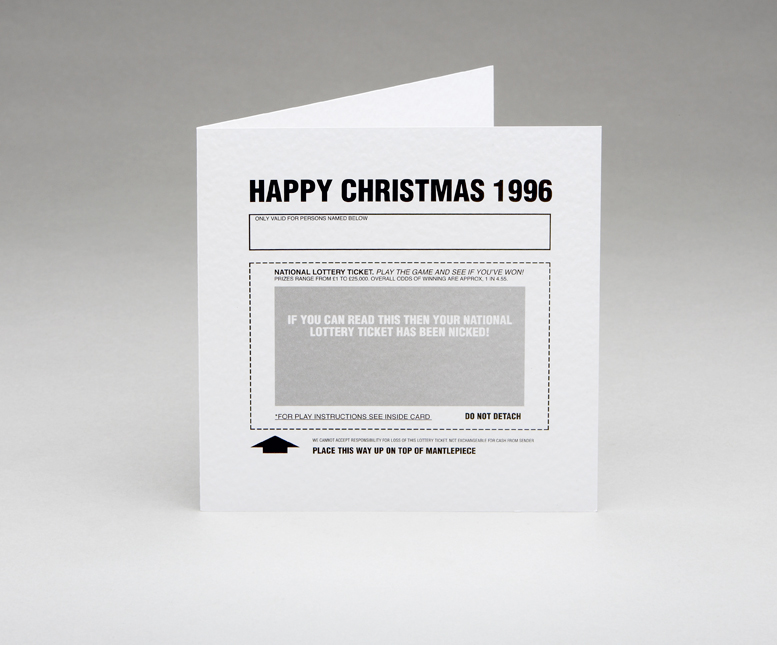
404_christmas-card-1996

Daniel Eatock, 1996. (Photo: Daniel Eatock)

The third and final speaker was Daniel Eatock. I have been a longtime admirer of Eatock’s work and his approach in putting ideas at the heart of his outcomes. For his talk Eatock went for the middle ground and attempted to answer the question at the end after he had spoken about his work. Conceptual as ever, he decided on a system for his presentation: 20 years in 20 minutes, one project a year for one minute each, (an Eatockian Pecha Kucha if you like). He failed, due to over-talking about some projects, but this didn’t matter. It was interesting to hear him discuss his desire in his early practice to try to eradicate subjectivity from his work, fearing that style and decoration was too shallow and over-shadowed the concept. His family’s 1996 Christmas card pictured above was one attempt at this. I would argue that it is impossible to be completely objective in design, for even the choice of typeface and deliberate ‘non-styling’ becomes a style and subjective choice. Regardless, this was a fascinating insight into Eatock’s thinking and was genuinely thought provoking.

In wrapping up his talk Eatock finally attempted to answer the question of ‘what next?’, by providing a slightly awkwardly worded statement. It suggested, (and I paraphrase), that problems shouldn’t necessarily be the starting point of design, and that through investigating outcomes first, we will uncover problems we didn’t previously know existed. Or to put it in simpler terms, produce answers in order to find questions. In throwing out such a knotty statement, Eatock has, for my money, at least tried to answer the question with some sense of critical thinking and avoided defining graphic design purely in terms of commerce which is too often the case. The latter usually closes down critical thinking rather than opening it up, and if graphic design is to be anything other than a means to sell stuff, then we have to resist the market place defining our reference points, even if the market place is where most designers have to operate in order to pay their rent or mortgage.

This very enjoyable evening was rounded off with a Q&A session chaired by Ravensbourne Course Director Liz Friedman, in which education, a hand’s-on approach to design, and ‘post-digital’ became subjects of discussion.

Kemistry Gallery now starts the long haul towards trying to establish a centre for Graphic Design in London.

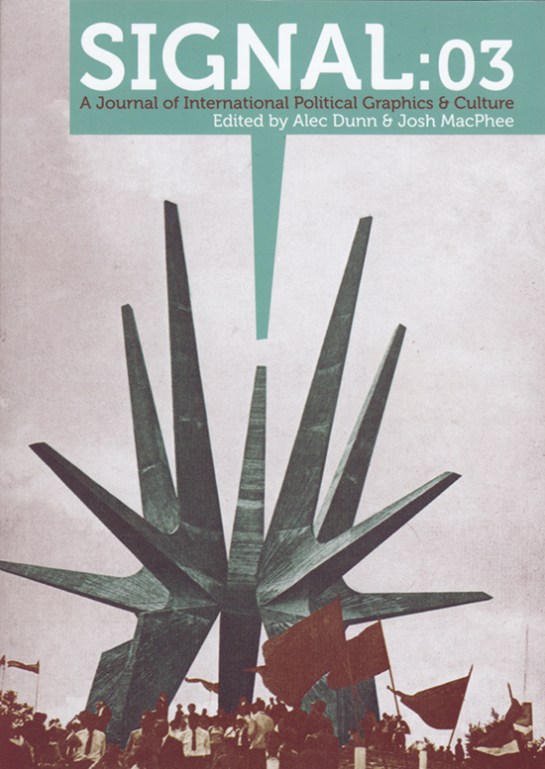
Cover

It seems somewhat ironic that a journal called Signal should pass me by, again. I wrote about the first two issues here in 2012. I can’t remember what, but something pricked my memory of the journal a couple of weeks ago and I went searching for the publication again only to find that issue three was released nearly a year ago with the forth due out this coming May. I quickly ordered Signal:03 and it doesn’t disappoint.
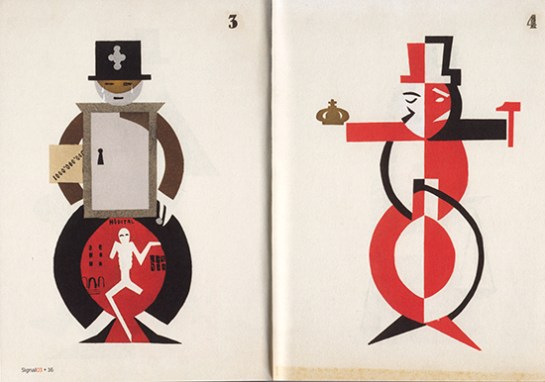
IMG_0001

Once again, what I’m genuinely impressed about with this publication is its breadth. The level of research done by the contributors is impressive and there is a sense of importance given to documenting/archiving social design stories that otherwise would be lost in the midst of time. For example, the image above is from a comical anarchist publication from Brussels in the 1930s. Titled: Game of Massacre: 12 Figures Looking for a Ball, the article explains this Aunt Sally type parlour game, created by Fred Deltor, (aka Frederico Antonio Carasso, 1899–1969), that enables you to cut-out various puppet figures, such as The Military, Property, Fascism, Religion etc, in order that you can throw balls at them. Included in the game was a mock cut-out theatre to set the figures in, and a ball, along with descriptions of the puppets. The above were described thus: (3) “Philanthropy has a chest in the form of a bank vault full of cash and tosses a single coin toward a cadaverous figure (lacking an arm and a leg) in from of a hospital”; and (4) “Social democracy is a two-faced figure who wields the attributes of both royalty and communism”. In uncovering the original publication, Stephen Goddard says: “Stylistically Carasso’s figures betray a knowledge of many of the important international impulses associated with progressive art organisations, periodicals, and movements of the 1920s, such as DeStijl, Het Oversight, Constructivism, and…Agit-prop.”

Signal reprints the preface to the game with a translation which states: “This is the game of massacre. Come! … Here it is, the opulent collection of royal, imperial, and devine puppets, that control you as they wish, you poor crowd, and who, by tragic reversal of roles, pull, from one to the other, the strings of your poor destiny.” Who says that anarchists don’t have a sense of humour?

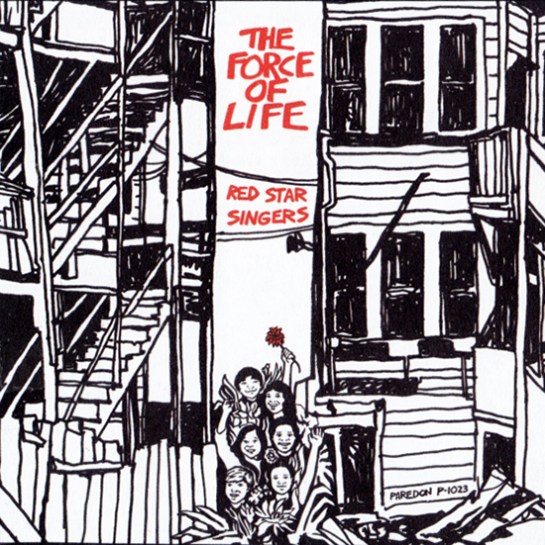
Like the previous two editions of Signal, issue three mixes historical and contemporary struggles and their associated graphics. So alongside an article on student led strikes in Québec in September 2012, you find the story of the incredible Barbara Dane, co-founder of Paredon Records. Between 1969 and 1985 Dane tried to document revolutionary music being made around the world and in an interview with Alec Dunn and Eric Yanke, she describes how she’d go from country to country recording different musicians and singers and return to the States to release them. In the space of 16 years, Paredon Records, with very little budget, released recordings from Vietnam, Salvador, Puerto Rico, Cuba, Northern Ireland, Ecuador, Italy, Britain, Angola, Chile, Greece, Thailand and a host of other countries. Of the sleeves, she says: “If you look at the records, they’re 12″ x 12″ on the front and then fold around about 5 inches on the back. It was done this way so they could print four at once, four-up on a single sheet of paper…At this printer, what dictated what you could do was economics… And so you figure out things like one color has read, the other blue, so then third cover can have purple. You figure out how to work with two colors, matte paper, that size.”

Record2

1978, design Ronald Clyne

Record1

1975, design by Ronald Clyne

Asking Dane about working with the designer Ronald Clyne, she says: ” If you caught him at the right time of day, before he drank too much wine, he was very very clever about what he did. You can see that he could take any kind of photo, work with it, and make it meaningful and not destroy the meaning of it. And always, his forte was selection of type and layout and all that. I’d bring him basic tools, the basic elements, photos and also drawings from artists I’d met.”

Record3

1975, design by Ronald Clyne

Record4

1974, cover art by Jane Norling

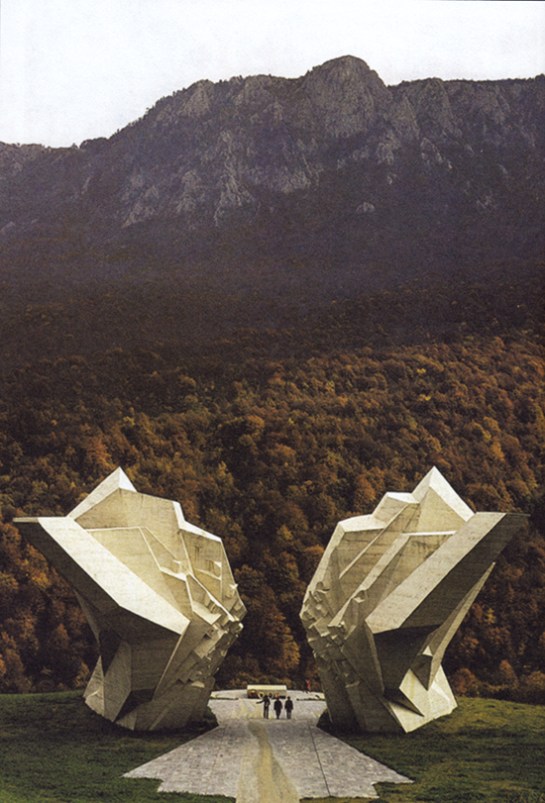
If Barbara Dane wasn’t inspirational enough, Signal:03 publishes an article by Ropbert Burghardt and Gal Kirn on the former Yugoslavia monuments to anti-fascism and revolution. These impressive and often modernist brutal memorials, built between 1945 and 1990, litter what is now split into seven different nations. The authors state: “These monuments are not only modernist, but contain as unique typology: monumental, symbolic (fists, stars, hands, wings, flowers, rocks), bold (and often structurally daring), otherworldly and fantastic. … Instead of formally addressing suffering, these memorial sites incite universal gestures of reconciliation, resistance, and progress…for those that encounter them, they remain highly imaginative objects: they could be ambassadors from far-away stars, witnesses of an unrealised future, historical spectres that haunt the present.”

Y_Mon4

Y_Mon3

Some have been landscaped and provide opportunities for family days out with cafes and play areas. Some are more formal monuments that you can enter, such as the one above in Kozara, while others you happen upon in the middle of nowhere. Started as a way of remembering the second world war, they were initially built spontaneously by local artisans. And if the guidebook to them printed in Signal is anything to go by, there is a vast amount of these monuments dotted around the region, with a map stating over 200 locations, (although many have been destroyed or decayed).

Y_Mon2

Y_Mon1

Once again I am truly impressed by Signal. Its historical importance stretches across many areas including art, design, architecture, music, politics, protest and social history. And although this could be seen as a research journal, it is easily accessible for those who are just generally interested in the topics it covers, students, scholars and armchair revolutionaries alike. I’m already looking forward to the forth edition due in May.

Signal:03 is available to buy from PM Press for $14.95

SA