Third year Graphic Design and Graphic Illustration degree students at University Campus Suffolk, (UCS), are holding an online illustration auction in April. Work has been donated from international illustrators such as Alysha Dawn, Miles Cole, Büro Ufho, Anke Weckmann, and Jamie Mitchell with more coming in on a daily basis. You can view the lots received to date on their website blink.com.
The auction will be hosted on their website, with bids being accepted from 30 March, concluding on 6 April. All money raised will go towards their end of year degree show, due to be held in early June at UCS’s Waterfront Building in Ipswich, (more details to follow).
The students are still open for donations if anyone has any work they would like to submit, and you can follow their progress via their Twitter feed and Facebook page, links below.
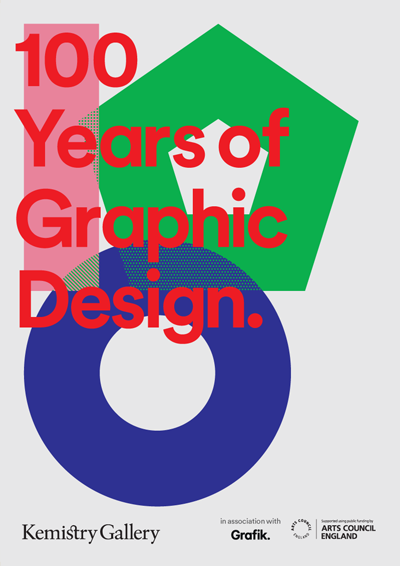
2014 saw London’s 10 year old Kemistry Gallery announce that it could no longer stay at its existing location in Shoreditch due to rising rents. After a successful Kickstarter campaign, Kemistry have just released details of a new pop-up exhibition to celebrate their first 10 years. 100 Years of Graphic Design will feature work from every designer and illustrator that they hosted an exhibition for in their 10 year existence, a list of design luminaries that stretches back 100 years.
The Kickstarter campaign raised £16000, and was further supported by an Arts Council grant of £15000. This money is being used to put on this celebration as well as host future pop-up exhibitions, publications and activities to support the UK’s graphic design community, and secure Kemistry Gallery’s long-term future. Excitingly, they state on their website that not only do they want to find a permanent space, but wish to transform it into a ‘National Centre for Graphic Design’.
The show will run from 7–15 March at Protein Studios, 31 New Inn Yard, London EC2A 3EY.
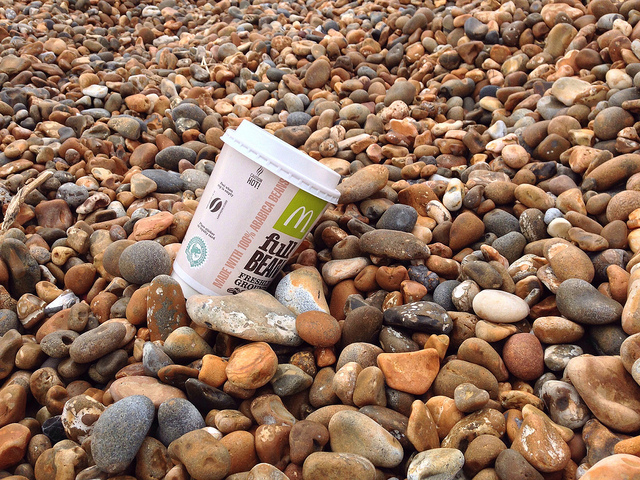
Vector illustration and chunky lower case type make for the new look reductive graphics adorning McDonald’s take away packaging. Created by Leo Burnett design agancy in Chicago, (I’m currently unsure if this packaging has made it to the UK yet), it appears to be another opportunity missed.
I think it’s fair to say that McDonald’s has an image problem. Well, it has many image problems actually, but I’m specifically talking about the one that glares at us all from roadside gutters and courtryside hedgerows. Any repeat visitors to Dubdog will know that I’m talking litter, a particular bugbear of mine. The world over, McDonald’s is the top brand, or one of the top brands, found on fast food litter, (see this report from Australia, and this from the USA, and this by the UK’s Keep Britian Tidy). I first noticed it some 14 years ago and it prompted my McJunk project. McJunk was an exploration into the relationship between graphic design and disposable culture through a photographic study of McDonald’s litter, (download the introduction to the McJunk photobook as a PDF from here, or visit the McJunk website).
Discovering this new McDonald’s packaging today prompted me to hunt around the Internet for current research into littering and I found some key reports by Keep Britain Tidy, ( * links at bottom of post). In these I came across two specific points of interest that relate to my own graphic design related research:
Firstly: through focus group discussions it is claimed that people would be less likely to buy a brand that they saw being littered. While this could be one of a whole host of reasons why McDonald’s had a bad year in 2014, I’m somewhat sceptical—what someone states in a focus group in the company of others is not necessarily the reality of what they actually do. But even if this were true, and it makes business sense to take seriously such market research, you would have thought McDonald’s would take note and try to do more to convince people not to litter;
Secondly: many of those surveyed by Keep Britain Tidy stated that they thought the Tidyman logo made little difference to people’s littering habits. This I can well believe. Usually sidelined within any graphic design hierarchy—often on the bottom of any packet—as iconic as I think Tidyman is, the Keep Britain Tidy report suggests that as a nation we have become used to it if indeed we notice it at all.
And herein lies my major problem with this McDonald’s redesign. When the graphics applied to something do not affect whether someone is going to buy a product or not—McDonald’s takeaways are not bought off a shelf; you don’t see the packaging until a BigMac has been ordered, ‘cooked’ and handed over—graphics are technically not needed for marketing purposes. They are usually only there to encourage brand recognition or as decoration. Therefore, if you rethought the side of a take away bag, there is a perfect opportunity for McDonald’s to challenge their litter problem by educating consumers through graphic design. But alas McDonald’s chose not to take this opportunity.
As mentioned in one of the Keep Britian Tidy reports that I read, it is a depressing thought that litter problems will only get worse over the coming years with further public sector cuts. Such cuts mean local councils have to decide what services to shelve, and I suspect many authorities will rightly decide important issues such as social care trump litter patrols. And unfortunately public sector cuts are likely to continue. For regardless of who wins the UK general election this year, both Labour and Conservative have declared their intentions to continue with these cuts. Even if we have another coalition government come May, which is the most likely scenario, one of these two parties is likely to hold the balance of power.
A couple of years ago I put McJunk on a hiatus. With this new packaging launch and after reading several Keep Britian Tidy reports, it looks like it might be time to resurrect the project.
McJunk, as found, on Shingle Street beach, Suffolk. Pre-2015 redesign.
When Occupy Design UK put out a call last week for Crisis Graphics in protest against climate change I immediately knew what I was going to submit—a reworked version of my 2002 piece Pear Shaped.
Originally created for a People Tree design competition, for which it won an award, I was never really happy with the typography. Occupy Design’s call gave me the opportunity to rework it, channelling a typographic treatment I liked in a piece of work by Ivan Chermayeff that I first saw at his Cut and Paste retrospective last year, (see Holiday exhibitioning pt 1). I’m not usually one for returning to my past creations but Pear Shaped suited the cause and recycling an old idea seemed appropriate. It is, however, an inditement of the lack of progress on climate change that an image created 13 years ago is still relevant today.
Occupy Design UK’s aim is to create an ‘Agit-Prop Army’ of images for the Time to Act on Climate Change protest in London on 7 March 2015. Time to Act’s intention is to put pressure on political parties to consider the environment in the run-up to the general election in the UK in May, with a further aim to build towards the COP21 UN Climate Summit being held in Paris in December.
Occupy Design UK is calling for posters and memes to support a day of action on climate change on 7 March.
They say on their website: “The demonstration on March 7th aims to put pressure on political parties before the general election, and raise the profile of climate change. It is also intended to energise and strengthen the climate movement – not an end-point but a stepping stone, it will be followed by local action immediately before the general election, the Climate Coalition lobby of Parliament in June and planning throughout 2015 towards the crucial Paris.”
On the call for images, they say: “We want your Posters and Memes for the Movement to use as an Agit-Prop Army of images to bolster the campaign on the streets and on the Net throughout the year.”
For more details, check out Occupy Design UK’s website here.
As 2015 approaches and I look back over the past year I can honestly say that one of my proudest achievements of 2014 was being awarded Shittest Tutor Of The Year by graduating UCS Graphic Design and Illustration students, (albeit via Mr Bingo’s Hate Mail project book ).
Happy New Year to all Dubdog readers. Here’s to 2015.
The WordPress.com stats helper monkeys prepared a 2014 annual report for this blog.
Here’s an excerpt:
A New York City subway train holds 1,200 people. This blog was viewed about 4,900 times in 2014. If it were a NYC subway train, it would take about 4 trips to carry that many people.
No lengthy introduction to my annual music round-up this year due to illness at the time of posting. My highlight releases and re-releases of the year, (those that I’ve returned to the most over the course of the last 12 months), have been, well, highlighted.
Most important band of the year? It can be none other than Sleaford Mods. Why? Well, for many reasons—because they are aesthetically the antithesis of Cameron, Clegg, Miliband and Farage; because they have zero pretensions; because they are not a ‘protest’ band; because not even 6music can play them despite desperately wanting to jump on the bandwagon; because they were the only band worth seeing live in 2014, (which is lucky as they were pretty much the only band I did see besides reggae superstars Jimmy Cliff and Lee ‘Scratch’ Perry); but mostly because of so many great lyrics, such as: “I can’t believe the rich still exist, let alone run the fucking country”; “The smell of piss is so strong is smells like decent bacon”; “Cameron’s hairdresser got an MBE, I said to my wife ‘you’d better shoot me'”, and, well, if you’ve heard them you’ll know. If you haven’t, scour YouTube.
Lastly before we get to the list, RIP SpaceApe. You’ll be sadly missed.
Kasai Allstars – Beware The Fetish
Laetitia Sadier – Something Shines
Swans – To Be Kind
Run The Jewels – Run The Jewels 2
Dels – Petals Have Fallen
Mogwai – Music Industry 3, Fitness Industry 1. EP
Sleaford Mods – Tiswas EP
Robert Wyatt – Different Every Time
Fugazi – First Demo, End Hits, Instrument
Bo Ningen – III
Tony Allen – Film of Life
Hacker Farm – Poundland
Dead Rat Orchestra – Pearl Fishers / Boat Notchers
Kate Tempest – Everybody Down
Pauline Murray and The Invisible Girls – Pauline Murray and The Invisible Girls
Various – The Wire Tapper 36
The Pop Group – We Are Time / Cabinet of Curiosities
Kode9 & The Spaceape – Killing Season EP
Phillip Henry & Hannah Martin – Mynd
Jon Langford & Skull Orchard – Here Be Monsters
Mary Gauthier – Live at Blue Rock
Manic Street Preachers – Futurology
Rapeman – Two Nuns And A Pack Mule
Hacker Farm/Libbe Matz Gang – Crass In Africa
Bonnie ‘Prince’ Billy – Singer’s Grave A Sea Of Tongues
Thom Yorke – Tomorrow’s Modern Boxes
Apex Twin – Syro
Big Black – Rich Man’s Eight Track Tape
Shellac – Dude Incredible, At Action Park
Liz Green – Haul Away!
Killing Joke – In Dub
Augustus Pablo – Born To Dub You
The Bug – Angels & Devils
Viv Albertine – The Vermillion Boarder
Fun Boy Three – Fun Boy Three
Mogwai – Come On Die Young / appendix
King Creosote – From Scotland With Love
Morrissey – World Peace Is None Of Your Business
Various – Studio One Dancehall, Sir Coxsone In The Dance: The Foundation Sound
Various – Frontline presents Dub 1975–1980
Various – Frontline presents Roots1975–1979
Edvard Graham Lewis – All Above
Eno . Hyde – Someday World, High Life
Cabaret Voltaire – #7885: Electropunk to Technopop 1978–1985
Death Grips – Niggas On The Moon
Various – Hyperdub 10.1
Lee ‘Scratch’ Perry – Back At The Controls
Plaid – Reachy Prints
Little Dragon – Nabuma Rubberband
Tune-Yards – Nikki Nack
Sleaford Mods – Divide and Exit
Cate Le Bon – Mug Museum
Parquet Courts – Light Up Gold + Tally All The Things That You Broke
The Bad Plus – The Rites Of Spring
Steve Ignorant with Paranoid Vision – When?
Fat White Family – Champagne Holocaust
Various – Wire Tapper 34
Sons of Kemet – Burn
Polar Bear – In Each And Every One
Liars – Mess
Iggy Pop – Zombie Birdhouse (thanks Ken)
Metronomy – Love Letters
Deadbeat & Paul St Hilaire – The Infinity Dub Sessions
Sleaford Mods – Chubbed up. The Singles Collection.
St Vincent – St Vincent
Various – Inner City Beat: Detective Themes, Spy Music and Imaginary Thrillers
Neneh Cherry – Blank Project
Beck – Morning Phase
Various – Evolution Of Dub Vol 8: The Search For New Life
Various – Studio One Rocksteady
The Upsetters – The Good, The Bad And The Upsetters
Young Fathers – Dead
The Move – Anthology 1966–1972
The Ex – How Thick You Think/That’s Not A Virus
Various – Songlines Top Of The World #98 +
Actress – Ghettoville
Thee Silver Mt Zion Memorial Orchestra – Fuck Off Get Free We Pour Light On Everything
Warpaint – Warpaint
Mogwai – Rave Tapes
Run The Jewels – Run The Jewels
Fire! – (Without Noticing)
The Spook of the Thirteenth Lock – The Brutal Here And Now
Primitive Calculators – The World Is Fucked
You could argue the need for yet another publication about punk. The ‘1976 and all that’ narrative has been told so often now that it reads like a dull pantomime with all original relevance of the story bled dry through over telling. There have been some publications in the last few years that have gone beyond this nostalgic rehash, such as 2012’s excellent Punk: An Aesthetic, but recently published The Truth of Revolution, Brother: An Exploration of Punk Philosophy (Situation Press) focusses, as the title says, on an area of the punk phenomenon that has largely been ignored.
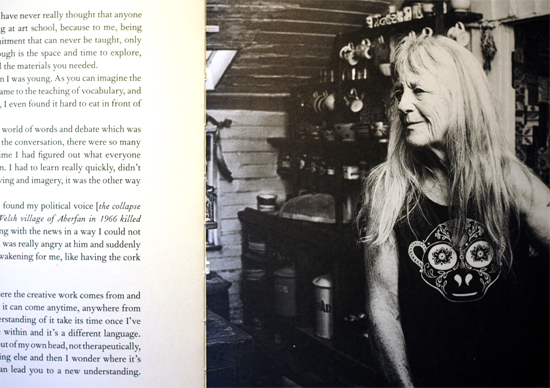
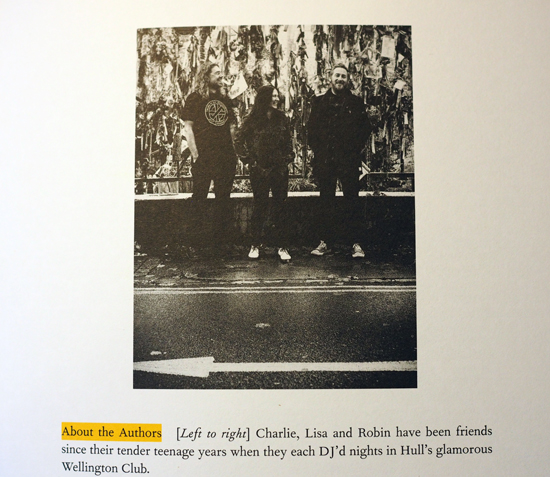
Produced by Lisa Sofia, Robin Ryde and Charlie Waterhouse, The Truth of Revolution, Brother, taking its title from a lyric by UK’s Crass, mostly examines second and third generation punks that took the early rebellious attitude and DIY beliefs and formed life philosophies of them. The UK anarcho-punk scene is more of a starting point for many of the very personal stories told throughout to book, and specifically Crass are cited by many as being influential to their world view. But this book is much more expansive than that as the authors travelled the globe to interview those they thought carried the spirit of ‘Do It Yourself’ and who looked for alternatives to accepted societal belief systems. Interviews with Crass‘ Penny Rimbaud, Steve Ignorant and Gee Vaucher, Subhumans’ Dick Lucas and the Poison Girls’ Vi Subversa tell the tale of alternative living and libertarian leanings in the UK. What punk meant to those on the other side of the Atlantic is represented by American comic book author and singer songwriter Jeffrey Lewis, producer / musician Steve Albini, straight-edge pioneer and Fugazi guitarist Ian MacKaye and Dead Kennedys‘ Jello Biafra.
Penny Rimbaud
Similar themes emerge throughout the different interviews, from being anti-war to championing vegetarianism, from environmental concerns to resolutely rejecting the ideology of government and control. While this may be a book about philosophy, personal politics and taking responsibility for your own actions is really at its heart.
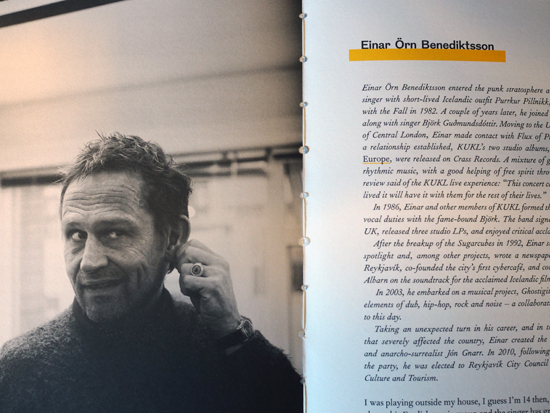
It is incredible to see what impact a small music scene from the UK, (in anarcho-punk), has had globally, for this isn’t just a tale of Anglo-American agit-prop. Einar Örn Benediktsson, (from Iceland’s The Sugarcubes), and Jón Gnarr formed the Best Party as a protest against Iceland’s 2008 economic crash which resulted in Gnarr becoming Major of Reykjavik in 2010—both cite punk as major influences on their attitude to politics. When it was set up the Best Party declared it would dissolve itself and as a result, after 4 years in power, Gnarr stepped down as Mayor this year after successfully running the city on anarchist principles. Benediktsson, who was a City Councillor says: “I’m an anarchist and people say, ‘But you’re not an anarchist because you work within the system. You are part of the system now’. Okay, I may be part of the system, but what I learned through punk was to listen and to take on board ideas, to try to understand and not make up my mind that things should be only one way.” After also stepping down after his first term, he goes on to say: “I don’t want the power. It’s not mine to own. It is everybody else’s so please, please come in, use it, be part of it because it’s ours to share, to feel good. I don’t think it’s naïve to say it.”
The interviews running throughout the book are interspersed with topic heading such as Disruption; Construction; Distraction; Creation; and The Dark Side of Punk as monikers to discuss different philosophical attitudes that emanated from punk. Anarchy as a political theory and personal practice is interwoven throughout, and shining through all the interviews and discussions is a positive attitude to humanity and wanting to make life better firstly through self-determination and secondly through not wanting to rip others off. As a result, at the heart of this is a very humanist world view, one that believes living by a personal set of principles is as important as trying to shake things up.
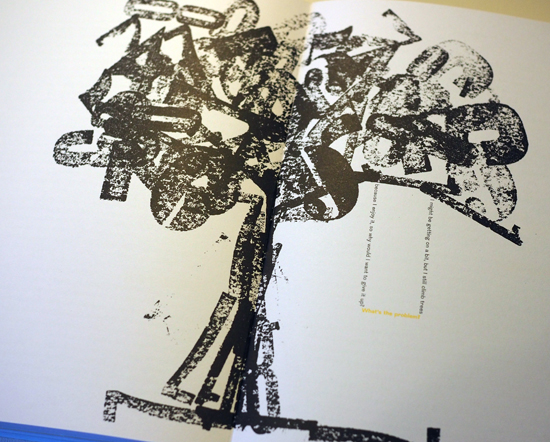
There are several new pieces of artwork featured throughout as well, from the likes of Gee Vaucher, Jeffrey Lewis, Dominic Thackray, Gaye Black and David King, among others.
Jeffrey Lewis, 2014
David King, 2014
Dominic Thackray, 2014
Gee Vaucher, 2014
Co-author Charlie Waterhouse, a graphic designer and photographer, has ensured that the book is beautifully typeset avoiding any punk aesthetic clichés. This helps to set this study firmly in the here and now, deliberately steering this away from coffee table book nostalgia and ensuring the reader sees this text is about the relevancy of punk and its myriad of associated philosophies to today.
Gee Vaucher
Each of the authors have been affected by punk as a musical force in different ways. “Charlie’s life was derailed when he heard the Fall’s Lay Of The Land on [John] Peel'”, declares the acknowledgements. While, “Lisa’s DJing career was almost strangled at birth by Steve Albini when she cued up her first record by Big Black at the wrong speed,”…and “Robin cut his teeth on punk music at the age of 13 by sneaking into UK Subs and Stiff Little Fingers gigs”. It goes on to say: “Although none of them knew it, The Truth of Revolution, Brother was always going to be the result of their friendship.”
For myself this book has allowed me to reflect on my days as a punk and the attitudes and beliefs that sprang from reading bands’ lyrics as I listened to their music. This went on to shape my personal view of the world and my sense of responsibility to those around me and society in general. One of the things that bands like Crass did for me was to teach me not to just be anti something but to also consider my role in shaping the world. As such, my vegetarianism, environmental considerations and distrust of hierarchical structures and elites comes very much from my time listening to Crass and associated bands in my late teens and early twenties. While I haven’t called myself a punk in years—I haven’t needed the youthful obsession of creating an identity for myself and thus labelling my whole persona for many years—this book has made me think again about punk as a proud term, the philosophies I adopted in my youth that have stuck with me to this day, and how this has shaped my outlook on life. And for that, I am very grateful to Lisa, Robin and Charlie, and to all the contributors to The Truth of Revolution, Brother.
Truth of Revolution back cover
The Truth of Revolution, Brother and a number of prints of photographs taken while conducting interviews can be purchased directly from Situation Press
Below, Crass’ Bloody Revolutions, the last line of which gives this publication its title:













 Dubdog