The BA (Hons) Graphic Design course at University Campus Suffolk is proud to be hosting Image Conference on 13 November 2012. Speakers will include designer and typographer Jonathan Barnbrook, illustrator and designer Brian Grimwood, Roderick Mills of the Association of Illustrators, and motion director Jonathan Yeo.

Held in the UCS Waterfront Building in Ipswich, the conference will look at where images come from, how they help us to understand the world we live in, as well as reflecting on the potential of images. The conference will co-incide with the UCS Waterfront Gallery hosting a retrospective exhibition of the work of Brian Grimwood, which celebrates the launch of his monograph: The Man Who Changed the Look of British Illustration.

There are three pricing structures for Image Conference: Standard ticket — £30, Studio ticket — £100 (admits 4), and Student discount — £10. Price of admission includes lunch and refreshments.

For more information, and to buy tickets, go to:
www.imageconference.org.uk

For a long time I’ve been quietly critical of D&AD’s education stance. Not that it hasn’t had one, but that it is overshadowed by its other activities to the extent it felt like a platitude. Further, it seemed that the opportunities that were available for students and their courses tended to be London centric and concentrated on those institutions with big reputations and long histories. Having a stand at the graduate New Blood exhibition several years ago was a daunting experience for lowly Suffolk students, not to mention expensive. They didn’t get a single look of interest in the two years in attendance and this wasn’t because of the quality of the work or their talent. But when faced with big guns like Ravonsbourne, Kingston et al, who seem to have unlimited resources to throw at their stand and a reputation that means industry creatives seek them out first and ignore the rest, it tends to leave a bitter taste. Initially I put this down to my own cynicism, until I heard other lecturers from regional colleges and Universities say similar things. And then they stopped running the XChange conference, where inspirational speakers addressed design lecturers in a fantastic networking opportunity. All this when the D&AD website proudly claimed ‘For Education’ next to their logo. It is not surprising that D&AD’s University Network numbers appear to have dropped in the last couple of years, if comparing the amount of stands at New Blood 4 years ago and the Universities listed on their website is anything to go by.

Well hopefully all that is about to change as incoming president Neville Brody announces some major changes, as D&AD plans to refocus its commitment to education. In a D&AD 50th Anniversary Special in this month’s Creative Review, it is reported that Brody will head-up an education sub-committee, which he says, “formed in order to make sense of the education space for D&AD and also to clarify the intention, the scope and the kind of activities D&AD should be doing.” When discussing its education remit being overshadowed by D&AD Awards, he states, “…the statement of intent has never been as clear as it could be.”

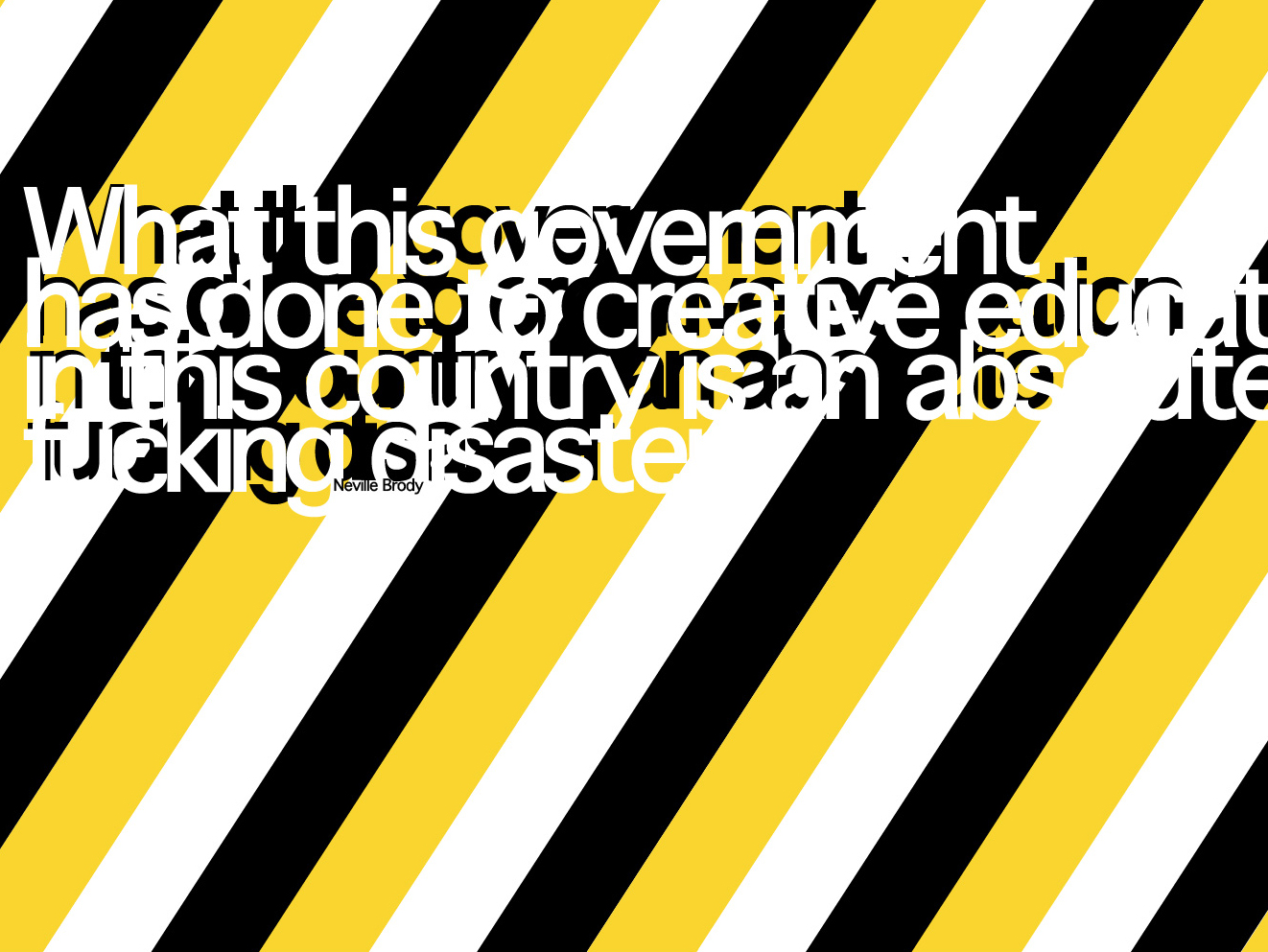
This is refreshing stuff, as are his comments on government attitudes to arts education. “We’re not going to be shy of raising our voices more politically…What this government has done to creative education in this country is an absolute fucking disaster.” He goes on to explain, “They’re shooting themselves in the foot. A huge amount of UK income comes from the creative services, so what possible good can come out of killing creative education? I don’t support the idea that industry should be paying for education but we have no choice, so let’s formulate a positive response, make it work and stick two fingers up to the government.” I look forward to what develops during Brody’s presidency.

Someday All The Adults Will Die: Punk Graphics 1971–1984, opened at the Hayward Gallery last week.
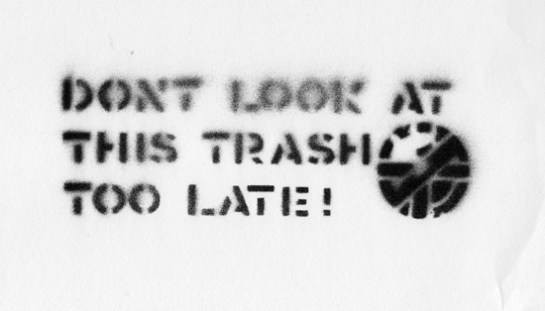
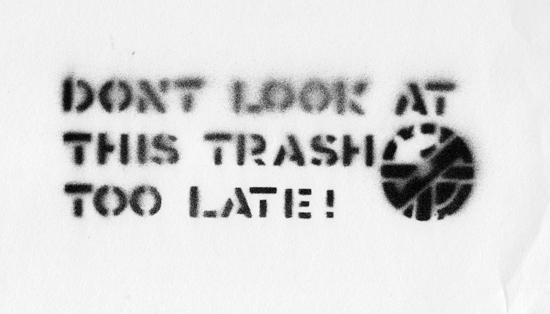
Crass stencil

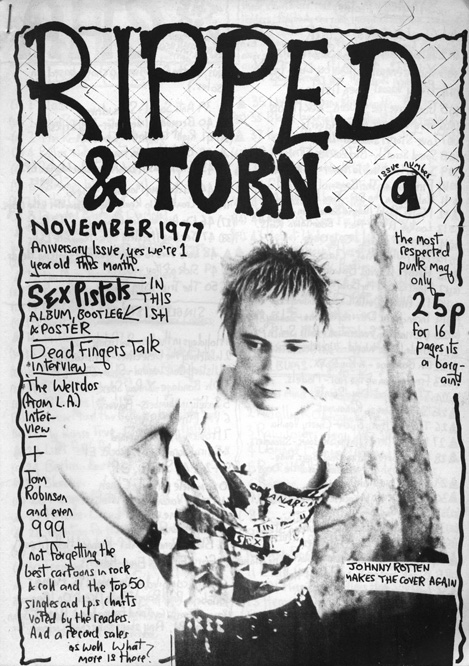
To coincide with the opening private view, curator Johan Kugelberg hosted a panel discussion of some key designers involved in early punk graphics, along with cyberpunk author William Gibson. Apologising for co-curator Jon Savage’s absence—who was very punk by being on holiday with his mum—Kugelberg introduced Gee Vaucher, who created all the graphics that surrounded Crass‘ musical output, Tony Drayton of Ripped & Torn fanzine fame, and John Holmstrom, the man behind the American Punk magazine.

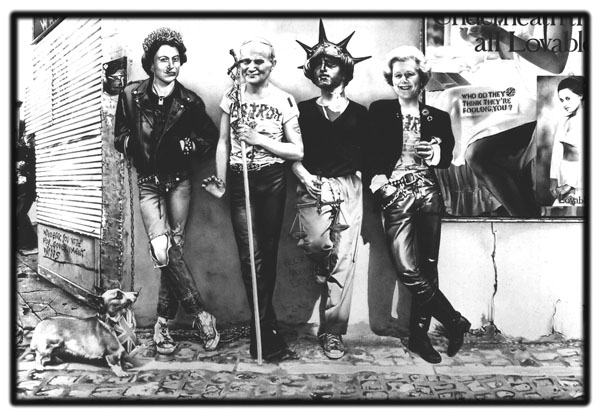
The discussion was pushed along admirably by Kugelberg, prompting anecdotes from Gibson about hearing both The Beatles’ Sgt Peppers, and Velvet Underground’s first LP within weeks of each other on their release in 1967. He came away thinking the Velvets the more important work because of the shock value it contained, and the fact that lots of people didn’t like it. (I have to say I agree with him.) Holmstrom also spoke about the impact of seeing the Ramones in 1974, and Vaucher about how Freddie Laker’s cheap air fairs helped punk bands play across the Atlantic divide. However, it was strange how music only entered the discussion as a separate entirety from graphic design, and I came away thinking it disappointing that the relationship between the similar creative processes involved in making punk music and punk graphics wasn’t discussed in any depth. This may be a result of Vaucher and Holmstrom’s art school background—they weren’t untutored kids working it out for themselves in the same way that many bands and artists were. While Vaucher’s work may look like photomontage, the anti-art form first championed by Dada artists, it is in fact painted in gouache. But to overlook the relationship between creative approaches to different art forms, and how similar processes arguably tied them together, is a glaring omission.
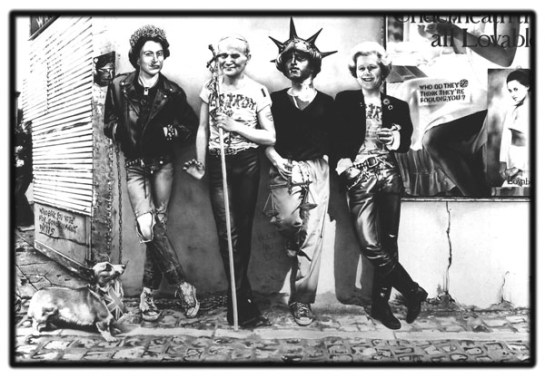
Gee Vaucher’s punk self-commentry—The Sex Pistols become figureheads of the State.

Refreshingly, Tony Drayton, while not explicitly talking about musicianship, or lack of it, did discuss making his first rough and ready Ripped & Torn fanzine, and how speaking to The Damned at the bar of one of their gigs became the interview he would include in one of the issues. Initially being inspired by Mark P’s Sniffin’ Glue, he created his own version using a photocopier at his place of work. Producing only 10 copies, he sent several out to, among others, Compendium bookshop in London, and was then shocked to get a request for 200 more for them to sell. This legitimisation and acceptance into the ‘scene’ was one of the most interesting aspects raised. And in fact, when looking around the exhibition itself, the sense of ‘anyone can do it’ shines through. The buzz of creating something, of it becoming a legitimate artefact through production, something you’d only previously seen professionals making, helped to launch many a career. Sure, there is a lot of poor artwork on display here, as you would expect. But the fact that punk allowed those who hadn’t gone, (or even dreamt of going), to art school to find an innate talent and drive, is one of the truly revolutionary things about the movement, both musically and graphically. Add to this the raw nature of much of the visuals, their aesthetic dictated by limited means of production, and ideas and content rise above concerns about production values. The immediacy, even urgency of the process, is obvious in much of the work throughout the exhibition, which further creates a kinetic energy to what is displayed.
It is good to see that Kugelberg and Savage have included early situationist texts and graphics here too. Debord and Atelier Populaire are on display, along with King Mob, who up until this point I had only read about and never actually seen any of their visual output. The politics of these movements are echoed throughout much of the punk music graphics, particularly that of Crass. These influences are obvious and this fluid idea of what punk graphics are eschews what Vaucher called the ‘BBC or Guardian filter’ of what constitutes punk in mainstream media. The exhibition is also interesting because much of the work wasn’t created with longevity in mind. Thanks to the personal collections of Kugelberg and Dial House, (Penny Rimbaud and Gee Vaucher’s communal house that was home to Crass Records for many years), this important exhibition showcases a period that touches design, music, politics and cultural history, and is available for all to see with the potential of reaching an even bigger audience than much of it did first time around.
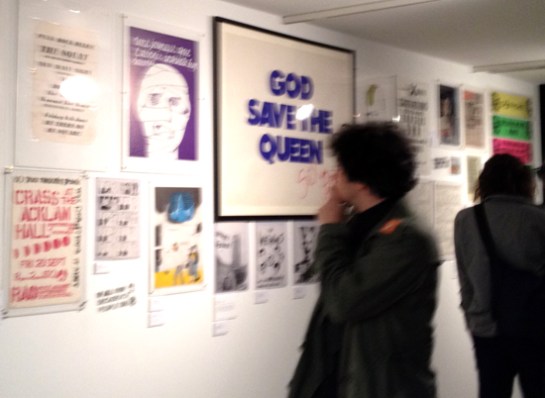
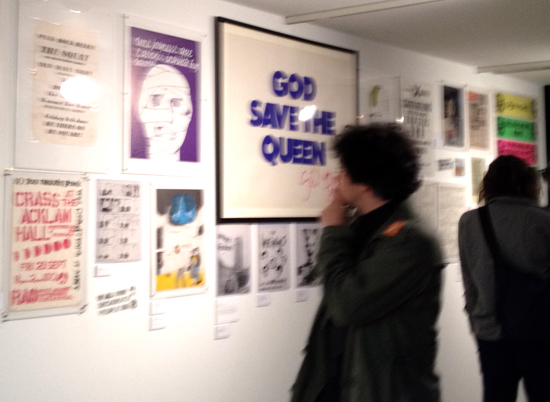
Someday… private view

All in all, the discussion panel was thought provoking. I proudly came away with a Crass stencil that Kugelberg had made using an original Crass cut out on display in the exhibition, to raise money for Pussy Riot. The influence of punk, and punk itself, as he claimed, lives on.

Someday All The Adults Will Die: Punk Graphics 1971–1984, continues at the Hayward Gallery, London, until 4 November, and is highly recommended.

P.S Apologies for the poor quality of the private view image—blame the ridiculous ‘no photos’ policy of British galleries resulting in hasty shooting.

Every year there must be hundreds of dissertations being written by undergraduate design students about the portrayal of women in advertising, all referencing the Dove Campaign for Real Beauty and Adbusters along the way. And you could spend a long time trawling the Internet for articles about sex being used to sell commercial products. I’ve become a little used to such arguments. However, I never expected to see sex being used to sell integrated office systems. That is, until I turned a corner in Norwich the other day to be confronted by this image on the back of a van:

I was dumbfounded and genuinely taken aback for a few seconds. I could start a basic National Diploma level Media Studies deconstruction at this point, mentioning the see-through blouse and the provocative pointing of the metaphor, sorry, I mean pen. I haven’t worked in many offices over the years, but I suspect this attire would receive raised eyebrows in the average insurance office. It certainly would in the Art and Design department staff-room I frequent in my day job.

Just as I was getting over the shock of this image, thinking how utterly inappropriate and offensive it was, I was confronted with this sight on the side of the van:

I can only imagine the conversation going on here, as the guy stares at the woman’s breasts and she leans provocatively over his desk. I don’t think I have ever seen anything quite so ridiculous on the side of a van before—I almost expected a slow 1970s groove to start playing as the woman in the photograph dropped her pen and reached under the table to ‘pick it up’!

I find it incredible that neither the designers who proposed this, nor the people at Mayday thought this wouldn’t be objectionable. The objectification of women in advertising and throughout the media is endemic in our society. However, the image on this van, for a photocopying business of all things, could not only be seen as an example of how sexist imagery has become a typical state of affairs in our everyday, but also how accepting and unchallenging many have become to such things. Without wanting to sound like some 1980s anarcho-feminist tubthumping kill-joy, the jolt of seeing this atrocious piece of applied graphics in a high street has convinced me more than ever that design criticism needs to challenge such things a little more often. It can’t be left to the undergraduates who still feel passionate enough about such things to write a critical dissertation only they and their lecturers will read.

I read about Signal: A Journal of International Political Graphics & Culture, when Rick Poynor reviewed issue 02 for Design Observer recently, and his is a much better critique of this journal than I could give here, so I’ll keep this brief. Published in the United States, issue 01 came out in 2010, and went totally under my radar. Now, in 2012, the second edition has been released, I snapped up both as soon as I could. If you are at all interested in political/agitational graphic design, then they come highly recommended. However, I couldn’t promote one over the other as both are as packed with diverse and inspirational content as each other.

The latest issue features articles about Portuguese street murals; a painter from Mozambique called Malangatana Valente Nguenha, ; spreads of front covers of British Anarchist newspaper Freedom, from 1908 to 1917; and Gestetner Art, among other things.

Issue 01 features the adventures of Red Rat, a comic strip by Van de Weert that evolved from the Dutch punk and squatting scene in the early 1980s; Mexican protest graphics that surrounded the Mexico 68 Olympics; the Taller Tupac Amaru printmaking collective; and graffiti artist Impeach, whose work travels the United States subverting ‘wild style’ graffiti on subway trains into Wild West style graffiti on freight trains.

What I like most about this journal, edited by Alec Icky Dunn and Josh MacPhee, is the exploration of different cultures, examining work and contexts that don’t necessarily crop up in books about political graphic design. That, and the mix of historical and contemporary work. Both these things keep this small book alive and relevant, and stops it being filed under history with out any relevance to the modern day. There are some obvious ‘go to’ books for those interested in political visual communication: Liz McQuiston’s two volume set titled Graphic Agitation, Milton Glaser’s The Design of Dissent, and the recently published and excellent Beauty Is In The Street by Johan Kugelberg & Philippe Vermes. However, because Signal is published as a journal, it gives the wide range of contexts and material discussed a connection to the here and now, a relevant voice that suggests a continuation rather than a static recording.

Now that I’ve found Signal, I just hope the gap between issue 02 and 03 isn’t as great.

I don’t know whether people still produce fanzines or not, but Kek-W is so tired of writing online that he has decided to produce one. Or rather, as he calls it, an analogue blog.

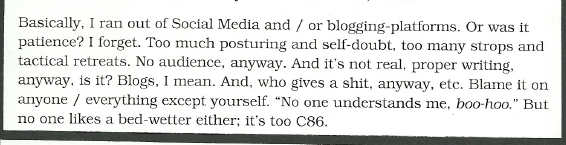
Titled Kid Shirt, this is basically a physically constructed fanzine involving actual cut and paste, which has then been scanned as a PDF for anyone to download. He sets out his rationale in the first pages:

Just like fanzines of old, this analogue blog contains lots of musicians you’ve probably never heard of. However, worthy of note is the strange hybrid between digital accoutrements and physical form, and the over laps in different media that Kek-W has deliberately exploited. For example, posts become pastes, and ‘previous’ and ‘next’ buttons simply indicate what direction you need to go in: they aren’t buttons at all. Further to this, comment fields remain empty because the PDF you download is a static, non-interactive document.

It is interesting to note the “proper writing” comment in the introduction, (see below), as I wonder whether the lack of audience right to reply to the text, frees up the writer. It could also be considered in direct contrast to the Guardian’s current Open Journalism campaign, which is something I could applaud if I hadn’t read many of the idiotic comments left on the Guardian website by knee-jerk reactionaries.

Aesthetically, Kid Shirt completely shreds any signs of slickness, despite the whole having a lo-fi sophistication. This, in my opinion, is all part of the publication’s charm. On his digital blog, also titled Kid Shirt, Kek-W states: “Download it, print it off, staple it together, read it like a fanzine…   Or…if you’re a MediaKid, use a PDF-reader, dump it onto your tablet, whatever,” before going on to vehemently disclaim any responsibility for it not working on different platforms because his call for testers was ignored. The punk attitude he displays is more than a visual style, evidently.

In fact, it is with this in mind that I was reminded of an article in Eye 82, whereby Rick Poyner wrote about British artist Laura Oldfield Ford’s Savage Messiah fanzine. He stated that the, “visual style is a kind of reclaimed punk that recalls the anarchic graphics of Crass,” (while completely forgetting to name check Gee Vaucher, the artist behind Crass’ visual output, in the process). Well, while there are similarities between Savage Messiah and Kid Shirt in terms of the crude nature of the layout and artwork, this is much more intriguing to me, as the narrative of online publishing has been used which takes this beyond mere pastiche, as could be claimed of Ford’s work. While much less political in terms of content than Savage Messiah, Kek-W is more oppositional as these virtual signifiers are détournements, that add a critique of contemporary publishing, something that affects all who dabble in online social networking. Ford’s anachronistic visual style potentially distracts from her important messages, where as Kek-W’s is at its heart.

Download Kid Shirt here.
Thanks to Uncarved.org for the heads up.

I’m vaguely ashamed to say that today was the first time I’ve visited Ipswich Art School since it opened as a gallery in 2010 after years of no-one really knowing what to do with it. Tucked in next to Ipswich Museum off a main thoroughfare in Ipswich, it is a marvellous building, purposefully built as an art school, with an amazing glass ceiling in the central atrium that floods the space with natural light.

Brian Griffiths’ Boneshaker. 2003

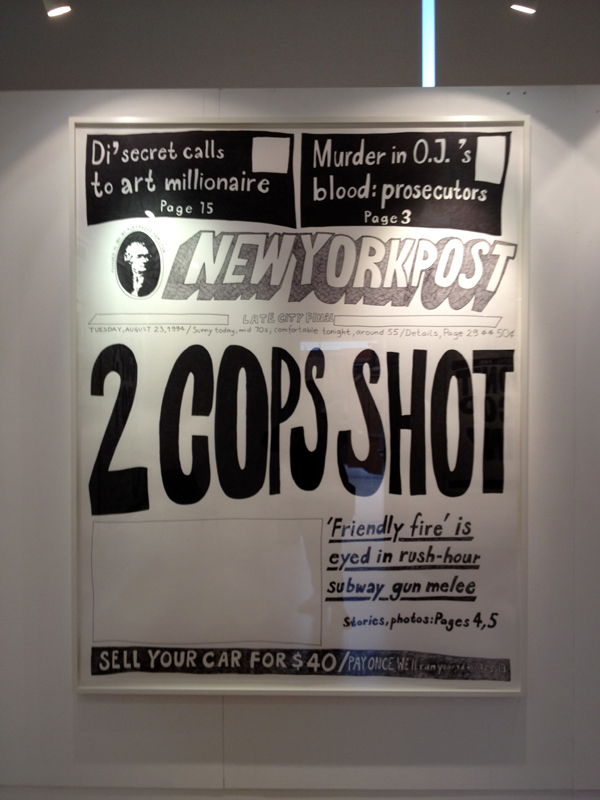
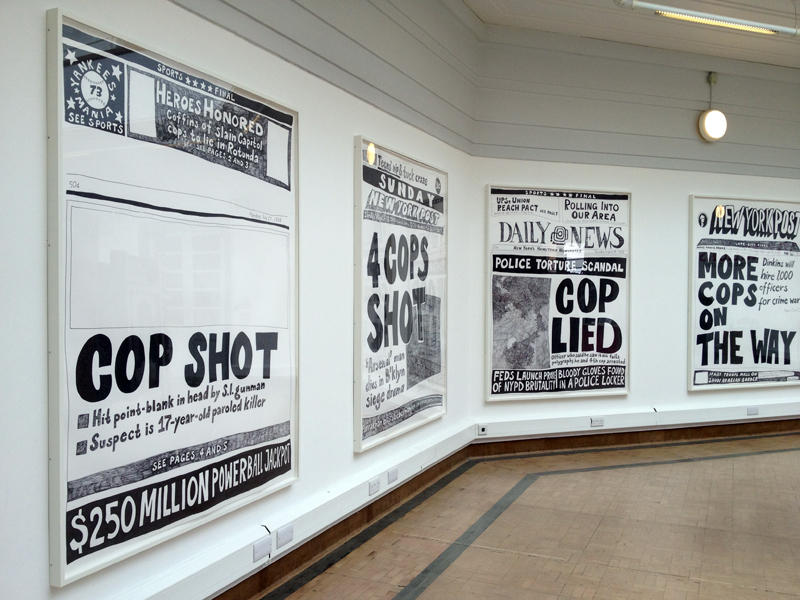
Currently on display is Revisitations, an exhibition of work from the Saatchi Gallery. The Saatchi Gallery first supported the opening of the Ipswich Art School with work for it’s initial exhibition two years ago, and it is good to see the link continuing. In the current show, I particularly liked Brian Griffiths’ Boneshaker, above, entirely made out of old furniture, and Aleksandra Mir’s Newsroom, made of giant drawings from New York newspapers from 1986–2000 and 2007.

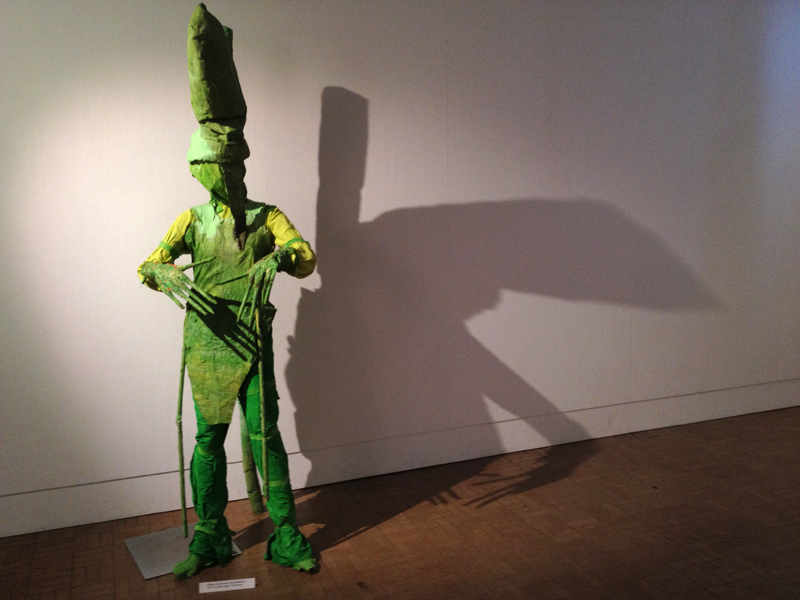
Other highlights include Spartacus Chetwynd’s spooky life-size costumes:

The Lizard, 2004

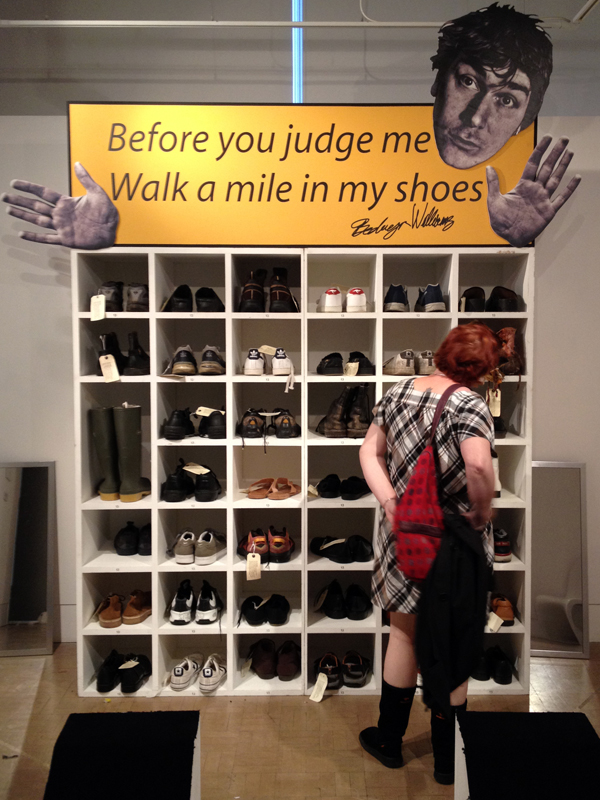
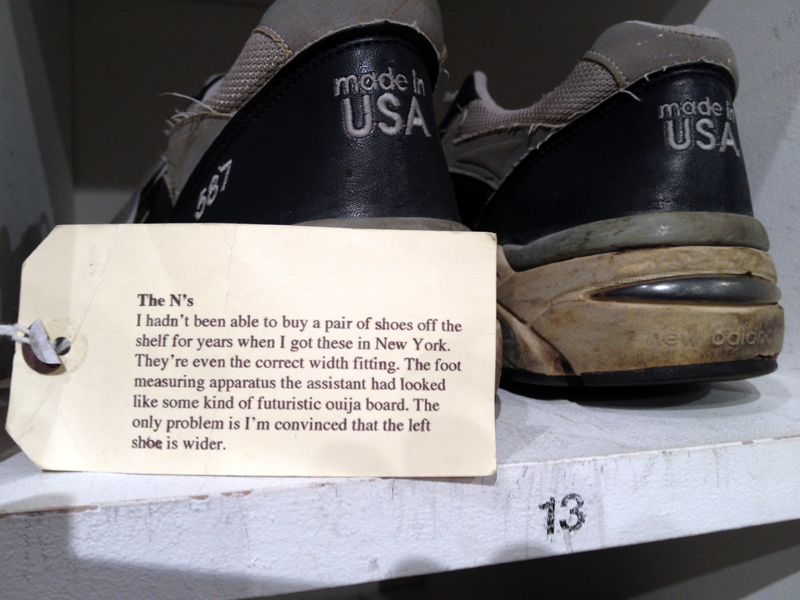
And Bedwyr Williams’ Walk a Mile in my Shoes, which made Claire laugh out loud several times. Visitors are invited to try on items from his personal size 13 shoe collection.

He provides anecdotes about each pair:

Other artists exhibiting include: David Batchelor, Steve Bishop, Matthew Darbyshire, Tessa Farmer, Guerra de la Paz, and Bedwyr Williams. The show continues until 26 August, and is well worth a visit if you are in the area.

—Binoculars

Claire and I have recently returned from a week on the North Norfolk coast. We were staying in a restored fisherman’s shack halfway up a hill that overlooked the Salthouse marshes and beach. Like many people who go on holiday nowadays, we took many electrical gadgets with their associated chargers.

Despite the digital devices that shackle us to power supplies that we insist on taking with us everywhere, one of the greatest joys of the holiday was watching ships and the Sheringham Shoal wind farm through our binoculars. We bought these on the recommendation of a twitcher colleague. We wanted something reliable, comfortable, and good value for money—we didn’t want to spend mega money on a pair that were more than what we needed. We bought them several years ago, somewhere in the region of £60–70, from Cley Spy on one of our many trips up the Norfolk coast. To some this may seem like a lot of money, but they were some of the cheapest in the shop. Having only used cheap binoculars previously, I can assure you that it is worth spending that little bit more. When not holidaying, they generally live in our car, only coming out on odd occasions. But as Claire and I usually insist on holidays that involve views, they are usually a permanent fixture when away from home.

One of the things that these binoculars made me contemplate while we were away, was how I have got so used to looking at things on screens, and rapidly accepted that I need to charge my daily digital accoutrements to the extent that I have to take plugs and leads with me where ever I go. Yet while the images that appear projected onto the double ‘screens’ through these Helios Field Binoculars are crystal clear, they don’t need plugging in; no power is involved, there are no batteries to recharge, and I don’t need to turn them on. Strangely, and momentarily, I found myself surprised by this, as if I had made an observation, (no pun intended), that I hadn’t considered before.

That these thoughts should strike me is an indication of how my mind has subconsciously linked the phenomena of seeing imagery on a screen with my use of electronic media. Obviously binoculars aren’t a screen—you look through a lens—but never the less, there is a double illusion going on here. Firstly, the trick on the eye/mind in bringing things closer to view. Secondly, that my mind is reading these images as being immediately in front of my eyes on the glass discs encased in metal, rubber, and plastic. Through recent lifestyle decisions of always having screens with me on the go, be that a digital camera or iPhone, my brain has, without questioning, accepted this as a way of seeing imagery. To some extent, it could be argued, that I am no longer seeing this imagery on the screen, I am now merely looking at it.

To add an irony to this tale, I have just considered that these thoughts struck me while watching the gentle beauty of an offshore wind farm, built because of our insatiable demand for electricity due to our growing habit for digital/electronic gadgetry. And in light of all this far distance navel gazing, I have a renewed wonder for my pair of humble binoculars.

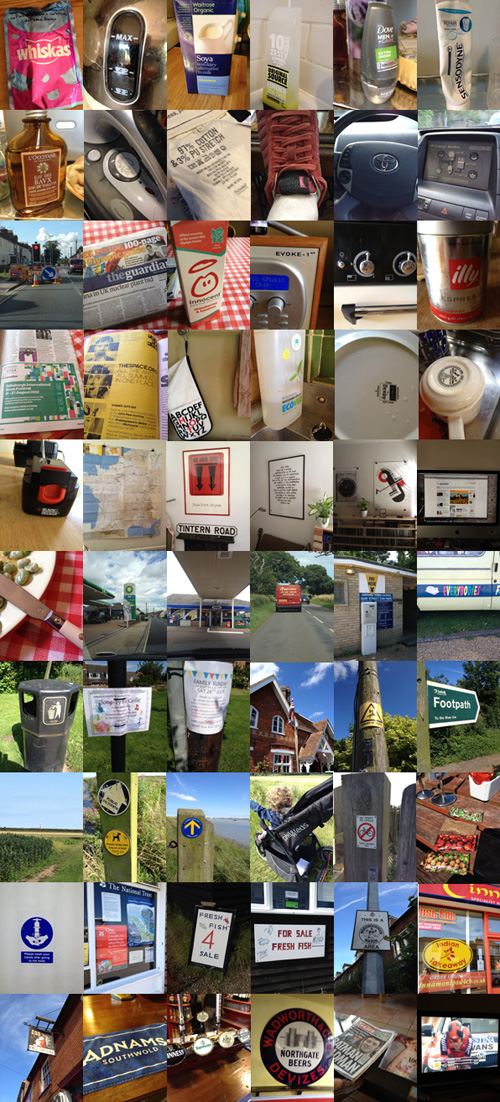
Yesterday, Lucienne Roberts and Rebecca Wright of GraphicDesign& put a call out for people to record everyday occurrences of graphic design in the context within which they found them. In a pop-up lab at the Design Museum, they received tweets of photographs of graphic design to go towards a research project titled Everything, which endeavours to prove how interconnected graphic design is with, well, everything.

In the spirit of this venture, I joined Twitter, and started snapping away, setting myself the task of recording every item of graphic design, professional or amateur, that I personally interacted with throughout the day. I did ignore some examples I came across: for example, on reading the Guardian, I only photographed the adverts that actually made me stop and read them. But other than that, I tried to capture every piece of graphic design that caught my attention for more than a passing glance.

After sending a couple of photos to @gdand_, it soon became apparent that this was going to be a mammoth task. I think I got most items throughout the day, (apart from being too focussed on getting a Guardian and some croissants while in the Co-op to get my camera out). However, because I did only manage a couple of tweets to GraphicDesign& before their 5pm deadline, I’ve documented the results here.

1–3 Cat feeding and morning tea
4–7 Ablutions
8–10 Dressing
11–13 Driving to the Co-op (for safety reasons, photos were only taken while stationary)
14–24 Breakfast and washing up
25 Strimmer battery
26 Checking the Tour de France map in my office
27–29 Posters (and a street sign) in my office
30 Checking the Guardian website
31 Branded cutlery at lunchtime
32–34 Drive to Orford (Claire was driving)
35–36 Orford car park
37 The bin I disposed bagged dog waste in
38–39 Amateur graphic design
40 A Union Jack
41 Beware
42 Footpath
43 A lighthouse in the distance (yes, this does constitute graphic design)
44–45 & 47 More footpath signs
46 Realising the pushchair my grandson was in was branded
48 Condiment packets on the table of the tearoom we stopped at
49 Toilet sign
50 Tourist posters
51–52 Dead fish being sold
53 On the way to the Indian takeaway and pub
54 Indian takeaway
55–58 The Fat Cat pub with just enough time for a pint while waiting for the takeaway
59 The Sun in the Indian takeaway
60 Watching the Tour while eating the takeaway back at home