Strom

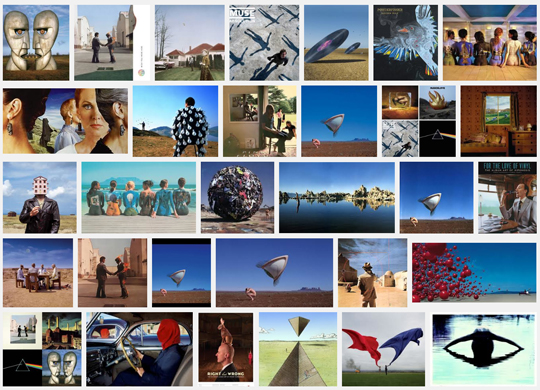
Google image search results for Storm Thorgerson

It was very sad news to hear of the death of Storm Thorgerson last month. Without a shadow of a doubt, Thorgerson was one of the greatest album sleeve designers ever and there are probably few record collections that don’t boast some of his work amongst their ranks.

It was refreshing to hear the reverence with which he was held in news reports and in discussions with friends. It was interesting to consider that some of those that mourned his passing may not even have previously known know his name, (nor that of Hipgnosis), but knew the work extremely well. This is testament to his enormous talent as much as because they recognised the work in relation to their  favourite bands. It is also interesting to consider that during these pronouncements, Thorgerson has himself become a metaphor by which to mourn the ‘good old days’ of vinyl.

However,  and here is where I commit graphic design sacrilege: I don’t actually like his work.

So there is a dichotomy at work here—how can I praise someone so much, admire their output and recognise its importance, while at the same time not actually liking it? This cognitive dissonance boils down to the fact of what Thorgerson was—a brilliant graphic designer. In an interview with Adrian Shaughnessy, of which aspects were reprinted in Thorgerson’s Creative Review’s obituary, he says: “All I try to do is represent the music.” In this one statement, he hits the nail on the head. As I don’t like the music he is designing for, it is only right, that if he is trying to represent that music, that I don’t like the imagery. But I can recognise its effectiveness all the same. Thorgerson has done his job brilliantly, and not attracted me, because I’m not the desired audience.

In reading through the discography on Wikipedia of the hundreds of album sleeves that Hipgnosis designed in their career—not to mention what Thorgerson did after their demise—I think I could list about eight records I actually like. Take Pink Floyd for example, I have never liked their post-Barrett output believing it to be pompous, cryptic, arrogant, nerdy, polished, and far too serious. I’ve always felt it to be stripped of the psychedelic drug induced experimentalism that made early Floyd so great with Barrett, (who also happened to write some killer pop hooks).  And as I cut my musical teeth in the late 1970s and early 1980s during post-punk, where playful and experimental records could make it into the pop charts, where there was a broadening of musical horizons rather, such terms as pompous, cryptic, arrogant, nerdy and polished, collectively have negative associations for me.  But Thorgerson brilliantly illustrates these in his cryptic, overblown set pieces full of knowing metaphors and forced school boy humour, yet devoid of any rough edges and any sense of irony. The one sleeve that Hipgnosis produced that stands head and shoulders above anything else they did during their reign, in my opinion, is XTC’s Go2. See previous Dubdog posts over on Blogger where I’ve discussed this sleeve extensively.

When thinking about album sleeve design, there are a few designers that have become synonymous with the medium that I really admire, such as Barney Bubbles, Malcolm Garrett, Stanley Donwood, and Julian House; but there are also many un-tutored designers who remain un-credited whose work I would just as easily hang on my wall. There are also plenty of examples of bands who have created their own artwork which are equally as effective as professional designers, and record labels, such as Constellation Records, who steer an aesthetic visual tone through the label’s output. Regardless of the scenario, if an album sleeve works, then it is generally because the author shares the same rationale as Thorgerson when creating the work—to represent the music. And as in book jacket design, if a graphic designer is doing their job properly, tutored or otherwise, you absolutely should be able to judge a record by its sleeve.

I saw Storm Thorgerson interviewed by Adrian Shaughnessy at D&AD XChange in 2009, and he proved to be a likeable rogue; slightly arrogant and antagonistic but a natural raconteur with a huge wit. The fact he wasn’t overly mobile, and that he needed several helpers to aid him on and off the stage, (as well as to give out postcards of his work to the entire audience, which was a nice touch), it was obvious that this larger than life character wasn’t in the best of health. Therefore I wasn’t completely surprised to hear of his passing. But regardless of my personal tastes dictating my knee-jerk reactions to the work he did for bands I didn’t like, his graphic design and music legacy is an important one, and I have nothing but utmost respect for the man and his enormous talent. The world is a poorer place for his passing and all music lovers, regardless of taste, owe him an enormous debt. RIP Storm Thorgerson.
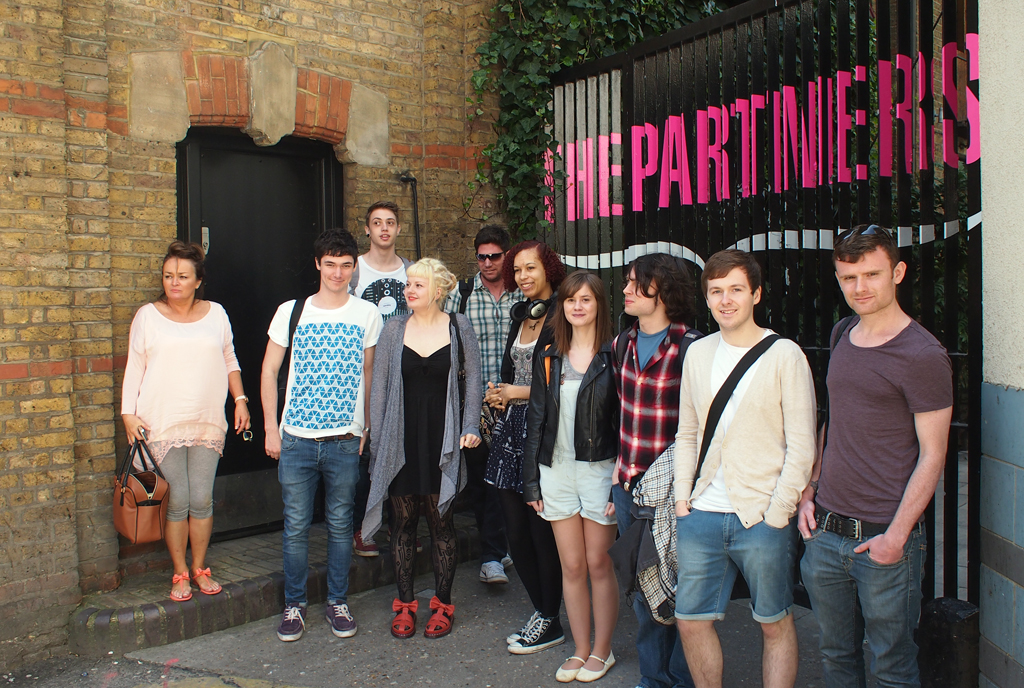
OLYMPUS DIGITAL CAMERAA big thank you to Sam Hall and Jess Harvey of The Partners for their presentation to second year UCS Graphic Design and Graphic Illustration students last week. Thanks also go out to Sarah Habershon, Art Director at The Guardian, for her talk to students on the same day about The Guardian’s illustration commissioning process.

RandB

I’ve just finished reading Wilson Neate’s excellent book about Wire called Read & Burn. Much like Wire’s proclamations in 1977 that for the band there were to be: “No solos; no decoration; when the words run out, it stops; we don’t chorus out; no rocking out; keep it to the point; no Americanisms,” Neate states of the book that: “This book was not read, vetted, or approved by Wire; this book is not a biography of Wire collectively or individually; this book is not about the band-members’ solo projects; this book does not forensically dissect each of Wire’s albums; this book does not mention every Wire song, record sleeve, tour or gig; this book does not provide a complete discography.”

Except for the first statement above about Wire not approving the book, the remainder of Neate’s manifesto is somewhat inaccurate. It is a biography, it does forensically dissect Wire albums, and it has a pretty comprehensive discography at the back. Even the first statement is at odds with the fact that Wire sell the publication as part of a package with their latest album: Change Becomes Us.

Despite this, Read & Burn tells the fascinating story of the band from their pre-Wire days at art school up to the rationale behind 2013’s Change Becomes Us. On the surface of it this book will seem to have little to interest non-Wire fans. The trawl through album tracks and how they came about will be excruciating for those who don’t know the work. At times, and I count myself as a Wire fan, I had to go back and listen to tracks to brief myself on what was being discussed. But this aside, what I would recommend it for, to the non-Wire fan, particularly those who work in creative fields, is the insight into creative tensions and artistic endevour. Throughout the book it highlights different takes by individuals about the same events, and how collaborative working is a difficult beast when egos and pretensions clash. The fact that each band member, (and band associates), were interviewed separately allows individuals to recount their side of the story, deconstructing their methodologies, likes and dislikes about what they’ve done, all the while being acutely aware that each member of the band will probably read the book at some stage. Each band member are all highly critical of Wire as a project, of each other, and of their output. But they intelligently examine what they’ve achieved collectively, from the prospective of creating sound experiments and art pieces that form a body of work by Wire, (there is often a sense of detachment when they use the band name, as if it is a living entity in itself). And as pretentious as that sounds, Read & Burn can be read more as a study of the psychology of artists working together than anything else, which makes it all the more interesting than your average rock biography.

The fact that Wire are still going after all these years, through almost wilful self-destruction, (and not in a standard drink and drugs narrative), is remarkable. As a catalogue of advice of how not to create a successful band, the following should probably be taught at rock schools everywhere: they refused to play old music at their gigs up until recently, (they once hired a Wire tribute band to support them live so they didn’t have to play old material): they wilfully alienated fans by staging experimental performance art pieces at shows; they would showcase new and developing work live; they immediately rejected the punk scene that spawned them on the release of their first ‘punk’ album; they  created sound experiments based on their own invented ‘dugga‘ rhythms and played the piece that came from this, Drill, live on American TV rather than their latest single, much to the annoyance of their record label; guitarist Bruce Gilbert refused to play on tracks that were too pop orientated for his liking—all these things, and much more, show the band as being wilfully perverse in their approach to earning a living from what they did. Much of this is down to the creative tensions in the band, of four people who clearly don’t particularly like each other, but who realise that as a creative unit they make something special, something that has a degree of uniqueness and as a result is a refreshing antidote  to your average band fixated on stardom who will compromise any integrity they might have in the quest for success.

Wire have always been concerned with being contemporary and not playing the punk cabaret circuit of their 1977 peers, this drive has kept them pushing forward throughout their lifespan. For the non-Wire fan out their, you’ll need to skip through the muso moments in this story. But if you work collaboratively with others, this book will reveal itself to you as a brave and honest depiction of the realities of ego clashes and mixed agendas, poor communication and assumptions, deliberate obstinance and artistic integrity. And with this, they individually demonstrate a collective sense of what constitutes their aesthetic collective identity, and use this as a measure for what they do and do not allow Wire to do artistically.

Listen to Wire’s latest release, Change Becomes Us, on Soundcloud.

Screen Shot 2013-04-02 at 17.51.22

I’m not sure when streaming a band’s forthcoming album, pre-launch date, became a popular marketing ploy. But for at least 7 of the new releases I’ve bought this year so far, I’ve been able to listen to them in their entirety prior to making a purchase, and usually several weeks in advance.

As a marketing ploy, this is good news for me—it is good to know what I’m getting before I buy it, especially with bands I am unfamiliar with. It was streaming The Villagers album {Awayland}, a band that had previously passed me by, that convinced me to buy it. This doesn’t mean I’m not prepared to take risks, or rely on a trusted journalist’s or friend’s recommendation, but it does mean I can be more discerning when hitting the ‘buy’ button.

Could this work against an artist? Well, certainly. That hotly tipped release that has been slavered over by critics who have had advance copies months ahead could end up being just hyperbole and bandwagon jumping, which is often the case. I pre-ordered the last, much lauded, Nick Cave CD when its release was first announced, and then nearly cancelled the order when it streamed on The Guardian as the lyrics were, in places, embarrassing, and the overly dramatic vocal delivery grated, (The Bad Seeds though, what a band—please make a solo album without Nick). But I still kept the order if only for the promise of well designed packaging.

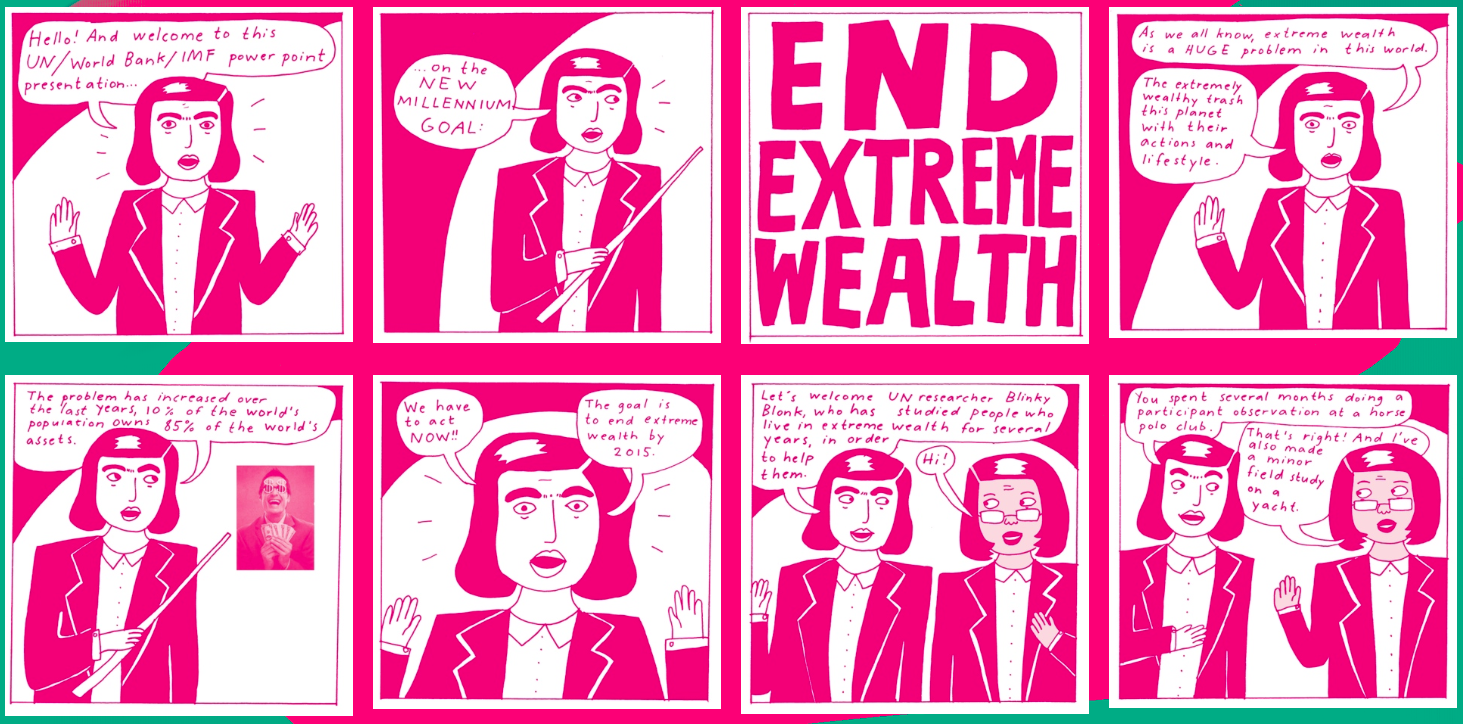
Therefore, it struck me as odd yesterday, when The Quietus announced that Stockholm electronic experimentalists, The Knife, were streaming their new album, due for release next week, on their website. Not so odd in itself in this day and age, but the fact that the artwork for Shaking The Habitual was also on show for all to see did strike me as such. The artwork contains a witty anti-capitalist side swipe by comic strip artist Liv Strömquist, (section above). This will come with all physical and digital purchases, and, as The Knife proudly announce, be fully readable online. As someone who has never given up on buying CDs as I’m old fashioned enough to still like having an artefact with artwork, this stumped me slightly. For now, I’ve read the comic online, laughed, got the joke. I’ve heard the music. Anytime between now and next week I can go back to The Knife’s website and listen to it again to the point that I could get bored with it. And then, I could stream it on Spotify once it has been released if there are still a few listens left in it. And I can point anyone that I might think is interested in such things to the website to read the comic strip, as I’m technically doing here. Therefore, this seems to really make buying a physical or digital own-able item pointless.

The question that now remains is: will I buy the album? Under normal circumstances I would do, as I like it. In some respects, as a sucker for (good) experimental electronic music that has its feet firmly rooted in pop, and as the sort of person who laps up satirical agit-prop comic book art, then I’m a target market for this ‘product’. The fact I’ve become interested enough to want to write about all this ‘new’ media gubbings, probably, also demonstrates that I’ve already, metaphorically at least, bought into this album. The fact that I will want to put it on my iPhone for the walk to work or for playing in the car, as well as listen to it on the decent stereo we have in our front room, (rather than on my computer speakers), will probably tip the balance. But if free wifi was rolled out across the country and I was truly always connected, then this, and other similar marketing activities, would probably, finally, start to kill the collector in me.

printedpages_1_1024x1024

I received the latest publication from It’s Nice That through the post today, (above), which promises to be a good read over the Easter break. However, one of my pet hates struck me as I flicked through it, (through no fault of INT), is a photo in an article about design studios that features happy designers working on laptops at desks.

IMG_4393

Now I’ve nothing against laptops if used as occasional mobile working machines, or if a desk space is equipped properly to accommodate one. The problem, however, is one of un-ergonomic working environments and the risks that this brings to the user of suffering repetitive strain injury (RSI) at some point in their future careers. And it isn’t just the small studios supplying desk space for interns and freelancers that seem to not notice this is a problem, as a picture in the same issue of Printed Pages shows Stefan Sagmeister works like this as well:

IMG_4391

And the trouble is, you see this sort of photo time and time again, and the issue never gets mentioned. Look, lots of happy designers working together in a ‘cool’ creative space, (photo below from It’s Nice That’s website):

TBMAIN

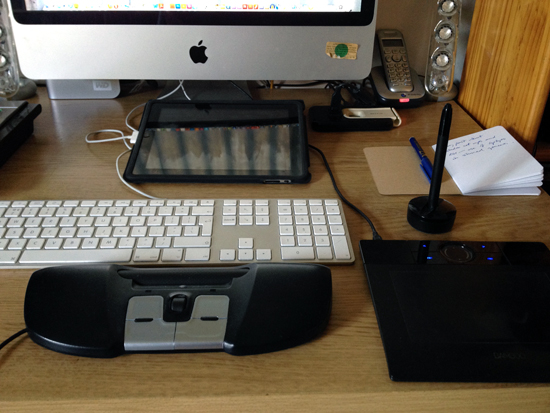
As someone who suffers from RSI, I have to be very careful about how I work. I never use a mouse anymore, as I worked out that much of my problem had come from a combination of poor posture for long hours while drawing in Illustrator using a mouse. That, and being hunched over a laptop at a desk in a previous job. Now, my home studio set up and my day job set up are designed exactly the same, with a Trackbar that I use to scroll and click with my left hand, and a Wacom tablet for cursor control with my right hand.

IMG_4389

I came to this set up through my employer, University Campus Suffolk, organising a work station assessment by a company called Posturite who gave some great advise about how I should work. Properly adjusted chairs, the angle of your back, arms and legs are all important factors as well, as important in fact, as taking regular breaks.  I also use voice recognition software for when I have to do a lot of writing. These measures, along with physiotherapy when RSI first reared its ugly head in 2009, have kept me working efficiently and not having to have time off because of the problem.

But I worry about future designers over reliance on laptops and poor work station set ups who aren’t aware of the issues. It makes me wince every time I see such a photograph of a ‘cool’ studio space that I know my students would love to work in once they graduate. I now include a health and safely lecture in one of my first year modules, which I know is not a sexy issue, but then neither are shooting pains in your arms or numbness in your fingers, and a depressing sense that you will never be able to do the job you love again.

Please note: this post is in no way meant as a criticism of It’s Nice That, these sort of photos are prevalent throughout the design media.

A big thank you to Michael at Winklebag for a very enjoyable day last Saturday getting to know how to use an Adana Eight-Five press, and to Claire for organising this day as a Christmas present.

Photos of my adventures here

Previous Dubdog post about Winklebag

Winklebag website

Earlier this week I was asked to go head to head on the radio in a song war with a friend of mine Tim Hetherington. Kim Trotter, who hosts the All Things Considered show on Ipswich Community Radio runs a feature called Wheels of Steel, where by she pits two people’s song choices against each other in three categories. When Kim asked if I’d be interested, I jumped at the chance, as I’m always up for a bit of musical competitiveness.

The winner was decided by studio guests, the band Reggae Rainbows, and I think I scraped a narrow win against Tim, 2–1, through bias, as one of my choices was Ken Boothe. You can listen to the show here—the Wheels of Steel feature is about an hour in.

For those without the time, here are the tunes I picked, and their competition, plus the rationale I emailed to Kim to justify my choices.

Best punk song: Shot By Both Sides by Magazine vs Alternative Ulster by Stiff Little Fingers
This was actually my second choice, the first being Boredom by the Buzzcocks from their Spiral Scratch EP. However, as that had swearing in it and not suitable for broadcast at 11am on a Thursday morning, I went for Magazine. Howard Devoto has the best Punk voice ever, (he also sung Boredom, as he was originally in the Buzzcocks before leaving after Spiral Scratch to form Magazine). The lyrics have an outsider spirit which completely fits the original punk ethos, as well as having nihilistic undertones. The fact that Pete Shelley allowed Devoto to take a guitar riff with him when he left the band and use it for Shot By Both Sides completes the circle on this. However, the irony is that Devoto formed Magazine because he didn’t want to be confined to punks’ narrow and reductive aesthetic, so I’m sure he wouldn’t be best pleased with thinking it is thought of as a punk classic.

Best pop song: Prince Charming by Adam And The Ants vs Just Can’t Get Enough by Depeche Mode
The opening guitar strum, the primal screams, and the acoustic riff all set this song up for greatness. And then the lyrics kick in, declaring that no one should be afraid to express themselves. Raising self-esteem and personal pride lies at the heart of this song, and that, in my mind, sends an important personal/political message from the get go. Questioning who has the right to tell anyone what to do, how to dress or how to behave should be at the heart of pop, whether implicitly through dress codes or explicitly through lyrics, and pop has been doing this since Elvis first shook his legs in Memphis in July 1954. My love for this song was reaffirmed when I saw Adam Ant in Ipswich last July, and the sight of pretty much the entire audience, (except for me), do ‘that’ dance, made me smile in admiration at them all as Adam sang ‘ridicule is nothing to be scared of’, probably one of the best pop lyrics ever.

Best sing along song: Everything I Own by Ken Boothe vs Sweet Talking Woman by ELO
This song is sheer emotion—there is something about Boothe’s tender vocal delivery that pulls directly on the heart strings. I have always been fascinated by how he pronounces his ‘H’s on this, which I stupidly emulate when I join in wishing I had such a voice as his. I sometimes wonder whether I just HAVE to sing along to stop myself from sobbing uncontrollably, it is that powerful. It is sung directly to the listener forcing you to FEEL his heartache. And all to a gorgeous Lover’s Rock rhythm to boot. But please, don’t anyone mention the Boy George version, or I’m likely to get very angry.


Thanks Kim and Tim, this was great fun.

Shutter

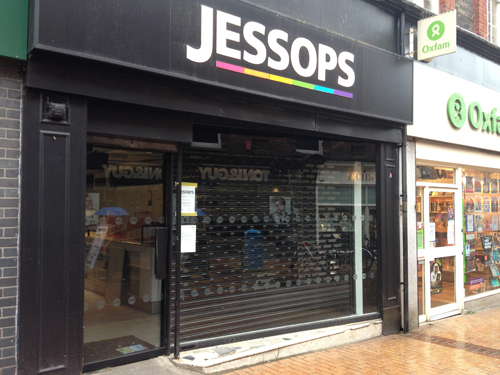
Shutters in a shut shop that used to sell cameras

Daniel Eatock Thank You Pictures

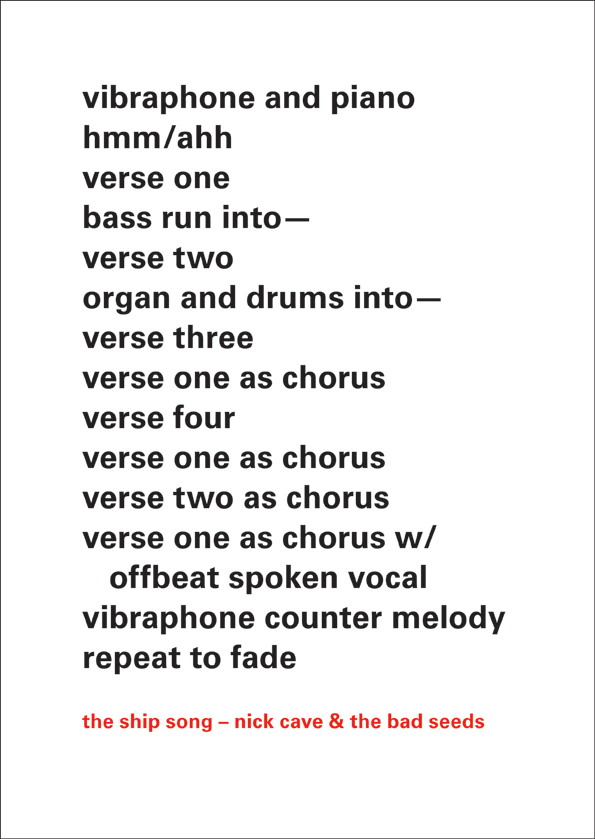
TheShipSongSingle

Next weekend I’m cashing in a Christmas present from Claire—a day at Winklebag Press in the middle of the Suffolk countryside. There I hope to learn how to use an Adana ‘Eight-Five’ letterpress tabletop printer, also a present from Claire.

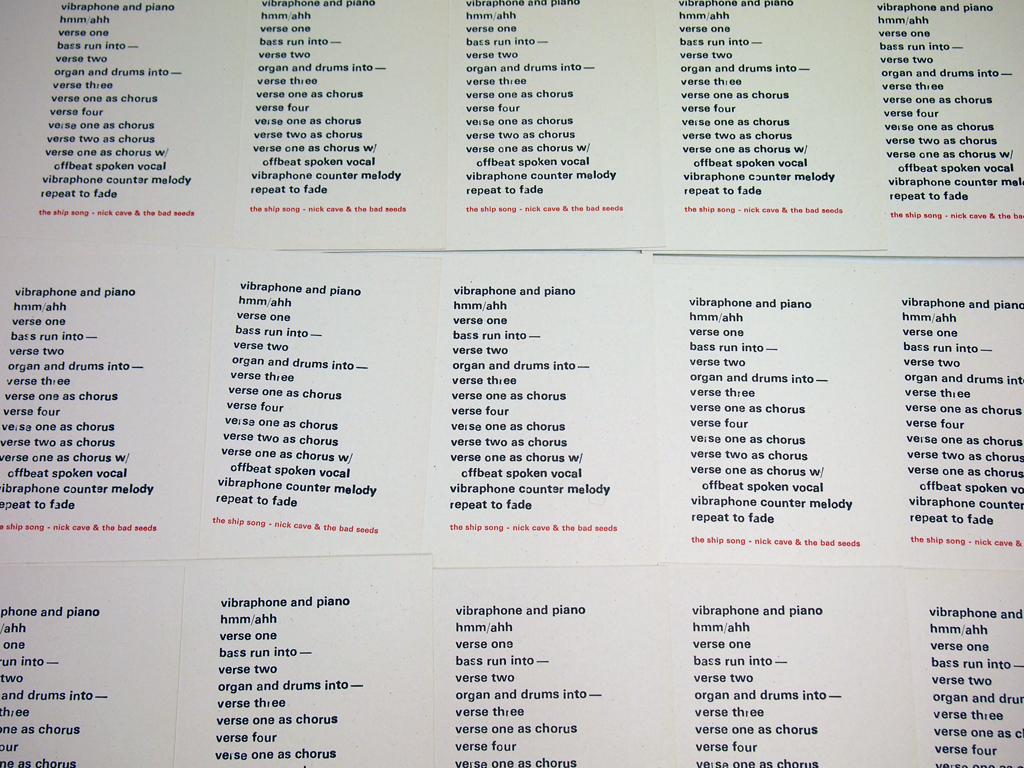
For my inky day out, I’ve artworked a new title for my Songcard project, (switching Helvetica for Univers in the process as Winklebag have limited typefaces), in honour of our 10th wedding anniversary.

Photos of my progress will follow after next week.


I used to think of myself as an album person, preferring to listen to an album all the way through, rather than choosing one or more tracks selectively. Many of my favourite bands wrote and released material specifically for the format. However, with a love of shuffle on my iPhone and being extremely disappointed with the When LPs Ruled The World ‘season’ on BBC4 this week, I’m beginning to change my mind about the album’s importance.

The most interesting aspect of this season was Danny Baker’s Great Album Showdown, although the concept of sitting around talking about LPs with only the occassional track being played to illustrate one of Baker’s contextual monologues, felt at complete odds with the format being discussed. The series looked at Rock, Pop and RnB in turn. During the Rock programme, being subjected to Jeremy Clarkson stating that The Clash were a more appropriate soundtrack to the Grunwick strike unfolding on television in the 1970s than the heavy rock he previously listened to, while salient, was strangely unsettling a statement to hear the double denim fashionista make—unsettling because the thought of the politically right of centre Clarkson listening to The Clash and watching striking workers with sympathy on TV made me want to burn my copy of Sandinista. The Pop edition featured the ever listenable Boy George, alongside the ever annoying Grace Dent. Overall, the best of the three programmes was the RnB episode, which at least did seem to have a genuine socio-political take within the discussion on the rise of the genre and in doing so, made some justification for the importance of holding such a discussion. Martin Freeman proved to be an enthusiatic and informative fan, while Trevor Nelson was an eloquent and intelligent counterpoint to the histrionics of Mica Paris.

Despite this, Baker demonstrated a deft approach to handling his guests pontifications on all things vinyl, being an amiable and knowledgable host. It remained, however, a questionable format for a programme that seemingly never quite understood what its true identity was; part chat show, part discussion panel, part history lesson, part music show, part debating society. None of these truly shone through as a raison d’être and the whole felt nostalgically irrelevant and vapid.

The main Friday night programme that Baker’s triptych built up to was, unfortunately, completely disappointing, and at times, factually incorrect. As a result of all this, I was left asking: what exactly was the point of this ‘season’ other than filling schedules with cheap TV?

And so, as I continually reassess how I consume music, and the more I am distanced from my own past by such poor TV programming, I can’t help thinking that Bill Drummond has a point in the Singles Verses Albums film he made after turning down the offer to contribute to this series of programmes: